Home » The Ultimate Guide to Rat Maze Experiments: Protocols, Applications, and Apparatus Selection
The Ultimate Guide to Rat Maze Experiments: Protocols, Applications, and Apparatus Selection
By BioMedOct 30, 2026
A rat maze experiment measures how rodents learn locations, retain information, explore unfamiliar space, and adjust choices. However, each maze places different demands on the animal. Water escape, exposure to an open platform, food reward, and spontaneous exploration can produce distinct behavioral profiles. Therefore, researchers should select a maze according to the memory process, disease model, stress tolerance, and training time involved.
This guide compares five widely used paradigms and explains how apparatus design and video tracking affect data quality.
Five Main Rat Maze Experiments
Morris Water Maze
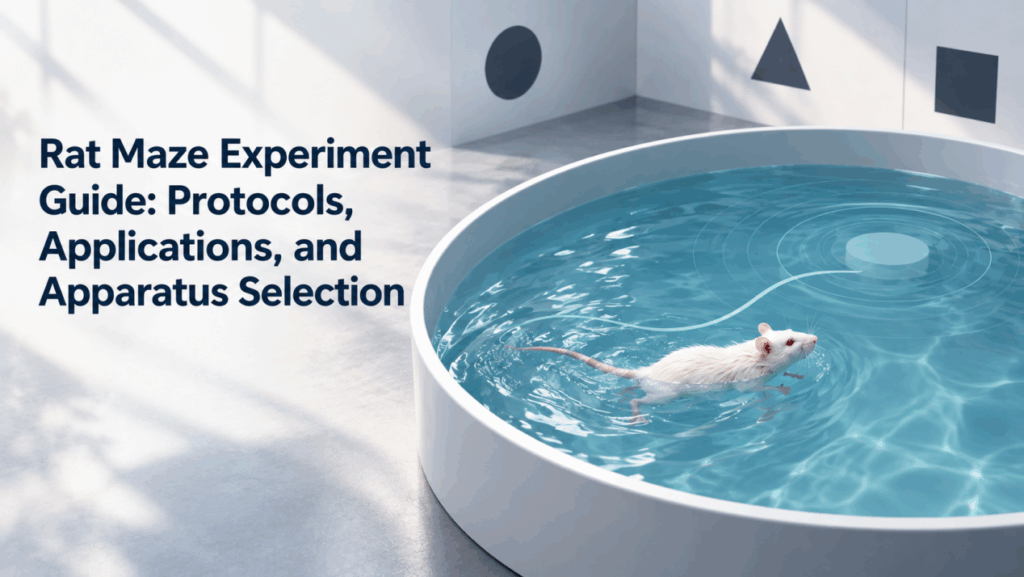
Mechanism and protocol: The Morris water maze (MWM) evaluates spatial learning and reference memory. A rat swims in a circular pool and uses external visual cues to locate a platform hidden below the water surface. During acquisition, the platform remains fixed while the starting point changes. A later probe trial removes the platform to test retention.
Key metrics: Escape latency, swim distance, path efficiency, target-quadrant time, and crossings over the platform location. Swim speed should also be recorded because impaired mobility can increase latency without indicating a memory deficit.
Best suited for: Studies of hippocampal injury, aging, Alzheimer's disease models, and pharmacological interventions. Swimming can introduce stress and temperature-related variation, so water temperature, cue placement, platform position, and trial timing require control.
Barnes Maze
Mechanism and protocol: The Barnes maze is a dry circular platform with multiple holes around its edge. Only one hole leads to an escape box. Bright illumination and exposure to an open area motivate the rat to find the target without swimming.
Key metrics: Primary latency, total latency, incorrect hole investigations, path length, and search strategy. A spatial strategy approaches the target with distal cues, a serial strategy checks adjacent holes, and a random strategy lacks an organized pattern.
Best suited for: Spatial-memory testing in aging, frail, or water-intolerant animals, as well as traumatic brain injury studies. Odor traces and uncontrolled visual cues can influence performance, so cleaning and rotation procedures require consistency.
Eight-Arm Radial Maze
Mechanism and protocol: An eight-arm radial maze has a central platform connected to eight arms. Selected arms contain food rewards while other arms remain unbaited. This arrangement assesses working memory and reference memory during the same session.
Key metrics: Working-memory errors, defined as re-entry into an arm already visited during the trial, and reference-memory errors, defined as entry into an arm that is never baited. Other measures include reward-collection time, choice sequence, and distance.
Best suited for: Complex cognitive profiling, executive-function research, and studies that need to distinguish working memory from reference memory. Food-reward protocols require habituation and controlled feeding, and they generally involve longer training.
T-Maze
Mechanism and protocol: The T-maze contains one start arm and two goal arms. Spontaneous alternation measures whether a rat chooses the arm not visited previously. Rewarded protocols can test spatial discrimination, delayed alternation, rule acquisition, and reversal learning.
Key metrics: Alternation percentage, correct choices, trials required to reach an acquisition criterion, and performance after the reward rule changes. Delay intervals can increase working-memory demand.
Best suited for: Short-term spatial working memory, conditional learning, prefrontal-cortex function, and cognitive flexibility. Removable doors can control forced-choice and free-choice phases, although repeated handling and side preference require attention.
Y-Maze
Mechanism and protocol: The Y-maze has three arms positioned at equal angles. Spontaneous alternation allows continuous exploration. In novel-arm recognition, one arm is blocked during familiarization and opened during the test.
Key metrics: Spontaneous alternation rate, total arm entries, time in the novel arm, novel-arm entries, and exploration patterns. Total entries provide context because low activity reduces the number of possible alternations.
Best suited for: Cognitive screening, acute drug studies, and early memory-deficit detection. Standard spontaneous-exploration protocols require limited training and no food restriction.
Comparative Selection Matrix: Choosing the Right Maze
No single rat maze experiment covers every cognitive domain. Selection should match the disease hypothesis and cognitive endpoint while accounting for stress, food restriction, throughput, and training time.
Maze
Stress level
Food deprivation
Throughput and training
Suitable hypotheses and applications
Morris water maze
High
No
Medium
Alzheimer's disease, hippocampal lesions, aging, and neuropharmacological rescue
Barnes maze
Moderate
No
Medium
Lower-stress spatial testing, traumatic brain injury, aging, and frail or water-intolerant animals
Eight-arm radial maze
Low and appetitive
Yes
Low throughput with longer training
Working-memory capacity, reference memory, executive function, and complex cognitive profiling
T-maze
Low or appetitive
Yes for rewarded protocols
High
Short-term spatial working memory, prefrontal-cortex function, discrimination, and reversal learning
Y-maze
Low
No
High
Cognitive screening, acute drug studies, spontaneous alternation, and early memory-deficit detection
The decision should begin with the hypothesis. A hippocampal spatial-learning study may require the MWM or Barnes maze, whereas a study designed to separate working and reference memory may favor the radial arm maze. T-maze protocols are appropriate for binary decisions and cognitive flexibility, while the Y-maze supports screening with limited training.
Recommended Apparatus Solutions: The Biomed-easy Advantage
Precision Hardware Engineering
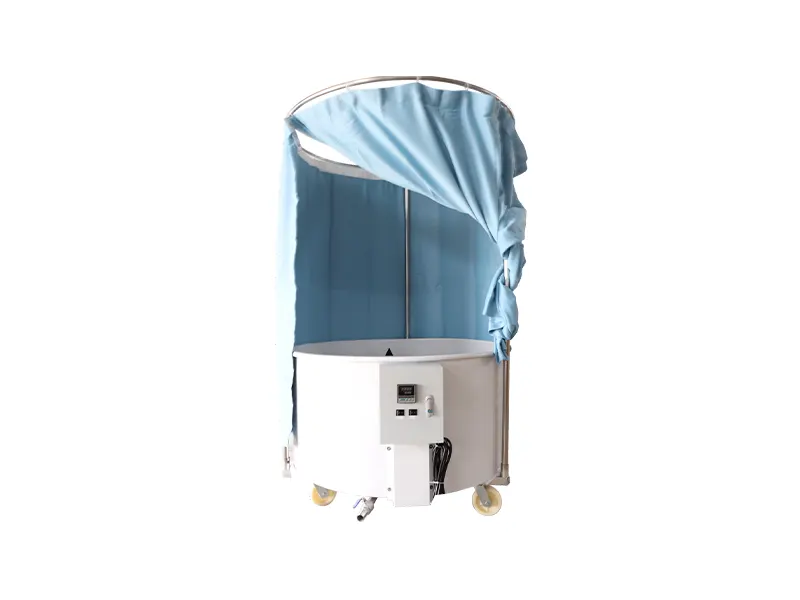
The Biomed-easy Morris water maze uses an anti-corrosion, non-reflective tank for controlled water-maze testing. A programmable automated platform-lifting option supports consistent platform positioning and reduces manual intervention between trials.
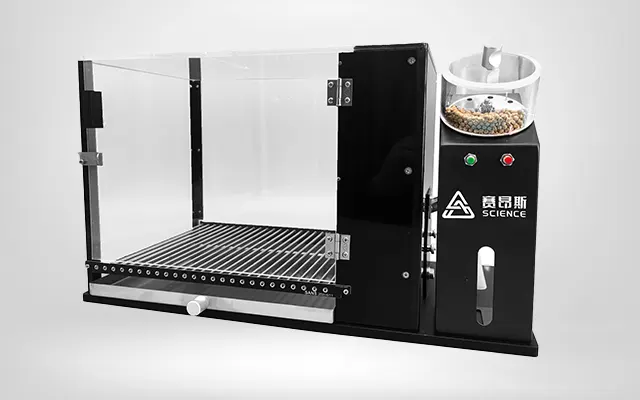
Biomed-easy dry mazes include Barnes, eight-arm radial, T-maze, and Y-maze configurations. These systems use medical-grade matte materials with odor-resistant surfaces. Depending on the protocol, they can be customized with automatic guillotine doors and food-reward dispensers for forced-choice, delayed-choice, or appetitive tasks.
Intelligent Video Tracking Integration
The SANS-AI video tracking system uses deep-learning-based trajectory tracking to identify the animal and analyze its movement. It reduces interference from lighting variation and water glare and automatically generates behavioral measures such as heatmaps, latency, path data, and quadrant dwell time.
Combining the apparatus and tracking system provides a coordinated workflow from trial control to data export. Researchers can select maze dimensions, doors, rewards, camera placement, and analysis zones according to the species and experimental hypothesis.
Explore the Biomed-easy learning and memory range to select a maze and tracking configuration suited to your species, protocol, and research objectives.