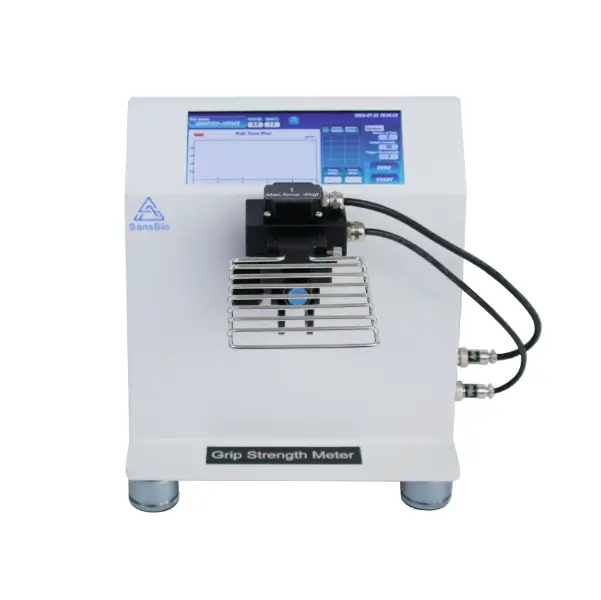
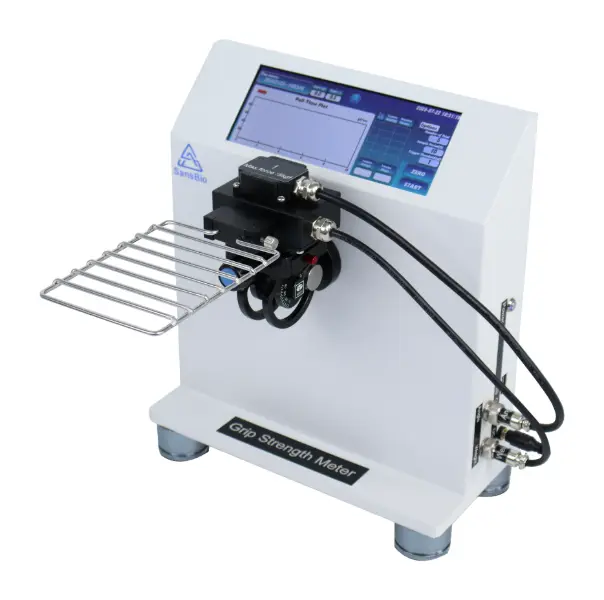
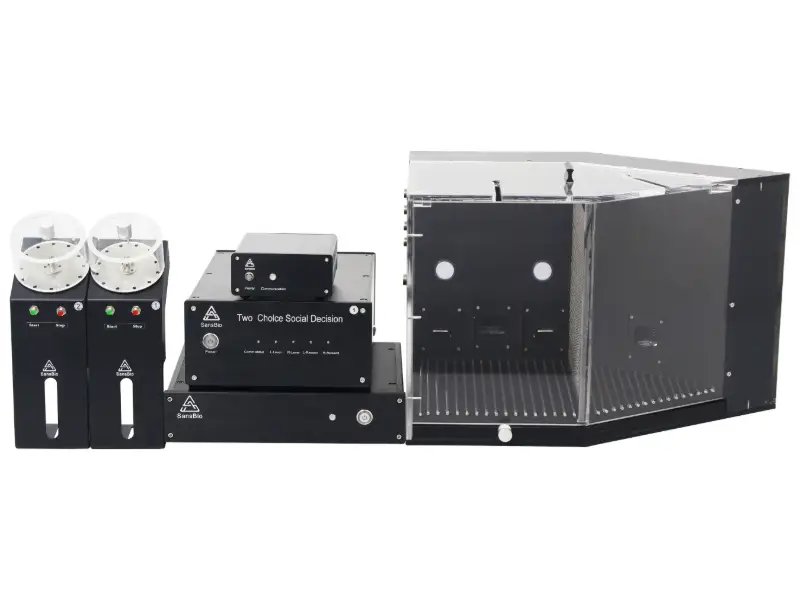
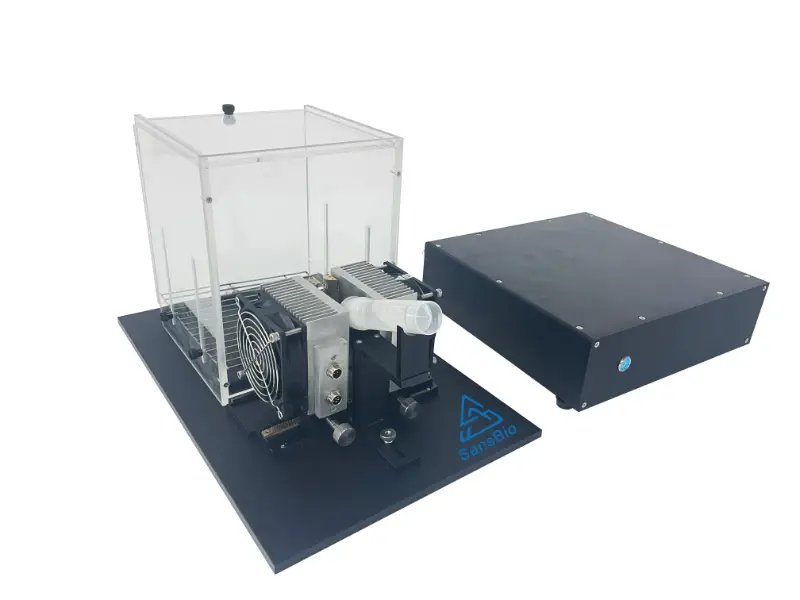
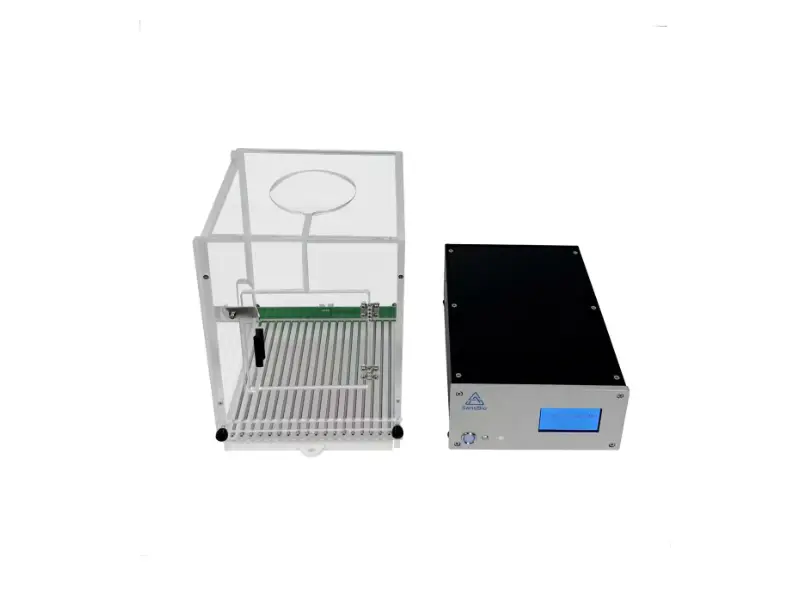
The rodents grip strength meter is widely used to evaluate motor and neuromuscular function in animal research. By accurately measuring mouse grip strength and peak pull force, this advanced grip strength meter for mice and rats provides essential, reliable data for assessing neuromuscular function and recovery in forelimb grip strength test and hind limb protocols.
Our Grip Strength Meter Pro SA415 Pro, can be considered as the next level in rodent motor and neuromuscular function assessment.
Designed for both rats and mice, this stand-alone system features a 6.8-inch HD touchscreen, high-precision 0.1 gf resolution sensor, and real-time grip force curves. With interchangeable grip bars, wide force range, and up to 2,000 data storage, it’s built for precision, flexibility, and efficiency in your lab.
Features and Benefits
All-in-One Grip Strength Meter for Rats and Mice: Functions as a standalone system without needing a PC connection.
Versatile Attachments: Includes 2 mesh grids and 5 triangular bars designed for precise forelimb grip strength test and hind limb evaluations in mice grip strength test and rat studies.
Dual Range & High Precision: Selectable Measurement Ranges (0–1000g for grip strength meter mice; 0–5000g for rats) featuring 0.1 gf force resolution.
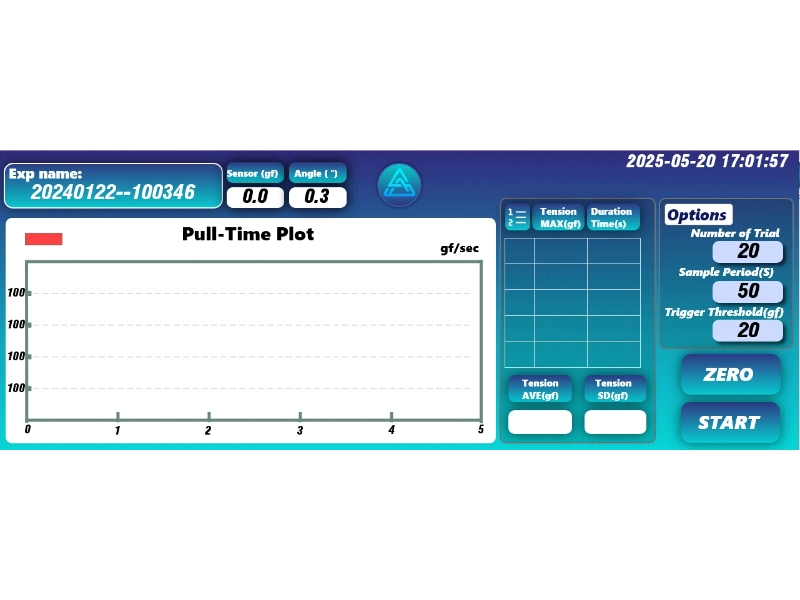
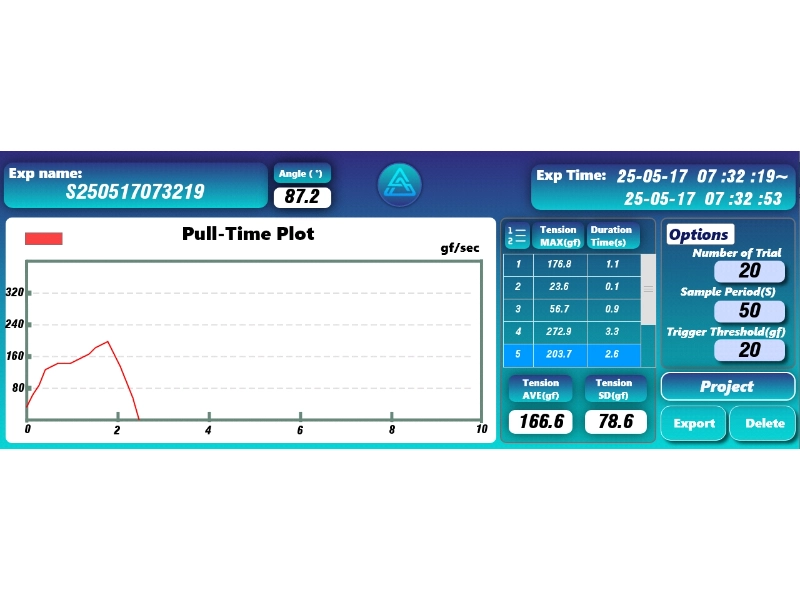
Intuitive Touchscreen Display: 6.8-inch HD capacitive IPS screen showing real-time force curves, peak tension, duration, and average values.
Automated Multi-Trial Testing: Execute up to 20 continuous trials per session to streamline your grip strength test in rats and grip strength test in mice while reducing manual data entry and simplifying repeated-trial recording.
Flexible Angle Adjustment: Adjustable testing angles from -30° to 60° with 0.1° resolution for customized mouse grip test protocols.
Complete Data Management: On-board storage for up to 2,000 records with full subject metadata (ID, age, weight, sex, group) and easy USB export (.CSV).
Applications:
Arthritis & Osteoarthritis
Parkinson’s Disease
Physical Activity
Motor Control
Muscular System
Central Nervous System (CNS)
Cognitive performance
Metabolism
Mood Disorders
Neurodegeneration
PainResearch
Sensory system
For more information, feel free to contact us to get a quotation for the price of buying a Grip strength meter.
Force ranges: 0–5000g (50N) for rats and 0–1000g (10N) for mice, meeting the needs of both species.
Commands can be executed via touchscreen or foot switch.
Equipped with a 6.8-inch high-definition capacitive touchscreen (1280×480 IPS) with 178° viewing angle.
Includes 7 interchangeable grip bars: 2 mesh grid and 5 triangular bars to suit various testing needs.
Angle adjustment ranges from 90°, with a sensor resolution of 0.1°, supporting flexible testing at various angles.
Force calibration integrated in GSM to ensure the accuracy.
Software Operation
Equipped with a high-precision, high-resolution sensor, with a force resolution of 0.1gf;
Supports data history viewing and data exportable via USB flash in .CSV format, allowing Excel-based curve analysis.
Accuracy: ±0.1% Full Scale (FS).
Delay time adjustable in 0.1s increments.
Large memory storage, save up to 2,000 data
Sampling rate: 1000 Hz.
Animal information stored includes: ID, age, weight, sex, grouping, and remarks.
Real-time display of grip force curves, with customizable sampling durations of up to 100 seconds and support for up to 20 trials per session.
Each trial's curve, peak force, and duration are automatically recorded.
Supports threshold-based auto-recording.
Supports remote upgrade.
Physical
Main Unit: 252 × 264 × 204 mm (L × W × H)
Grip Bar Dimensions:
Grid for Rats: 10 × 20 cm, bar diameter 0.30 cm
Grid for Mice: 9 × 12 cm, bar diameter 0.20 cm
Triangular Bar for Rats: 8 × 9 cm, bar diameter 0.35 cm
Triangular Bar for Rats: 8 × 9 cm, bar diameter 0.30 cm
Triangular Bar for Rats: 8 × 9 cm, bar diameter 0.25 cm
Triangular Bar for Mice: 6 × 7 cm, bar diameter 0.20 cm
Triangular Bar for Mice: 6 × 7 cm, bar diameter 0.15 cm
Q1: What is the main difference between SA415 and SA415Pro Grip Strength Meter? SA415 (Standard Version): A cost-effective digital mouse grip strength meter featuring a physical-button LCD interface. It functions as a standalone unit or connects to a PC to conduct a reliable grip strength test in rats or mice. Resolution: 1 gf.
SA415Pro (Advanced Version): An upgraded rodents grip strength meter equipped with a 6.8-inch touchscreen interface for full standalone operation without a computer. Resolution: 0.1 gf.
Q2: How is data exported in Grip Strength Meter, and can force curves be viewed?
SA415 Standard Version: When connected to a PC, the accompanying software generates force-time curve graphs (.JPG format) and exports raw data to Excel or TXT files.
SA415Pro Advanced Version: Allows researchers to view real-time force curves and historical data directly on the touchscreen, with one-click batch export via USB. This standalone capability makes it ideal for high-throughput preclinical neuromuscular disease research.
You can check our Software & Operating Guide for step-by-step data export workflows.
Q3: Does the Grip Strength Meter include a built-in battery for mobile use?
Yes. The SA415 Standard model features a built-in rechargeable battery providing up to 20 hours of continuous operation, allowing flexible deployment in biosafety cabinets, ventilated hoods, or mobile workstation environments. The SA415Pro model requires an external power supply to power its high-definition touchscreen display. Contact our team through How to Order to request customized power options or international plug types for your grip strength meter mice setup.
Q4: Should animals use forelimbs only or all four limbs during the Grip Strength Test?
This choice depends on your specific experimental endpoints: Four-Limb Grip Strength Test: Evaluates total body muscular force, making it widely used in sarcopenia research, aging studies, and systemic neuromuscular disease models. Forelimb Grip Strength Test: Targets localized motor function in a forelimb grip strength test, ideal for assessing neurotoxicity, peripheral nerve injury, or drug-induced motor impairment in a mouse grip test.
Q5. How does the Grip Strength Meter measure peak force during a rodent grip strength test?
During a grip strength test, rodents grasp a grid or bar connected to a force transducer. As the animal is gradually pulled, the meter records the maximal tensile force exerted and save automatically.
Q6. How should the grip grid or pull bar be cleaned?
After each test, clean the grip grid or pull bar with alcohol to remove debris and odor cues. Residual odors may influence stress or grip responses in subsequent animals and introduce variation between trials. Consistent cleaning helps maintain comparable testing conditions across animals.
2.The gender-specific adverse association of polycyclic aromatic hydrocarbons on skeletal muscle mass and strength in the general adults and the possible mechanisms in experimental rats