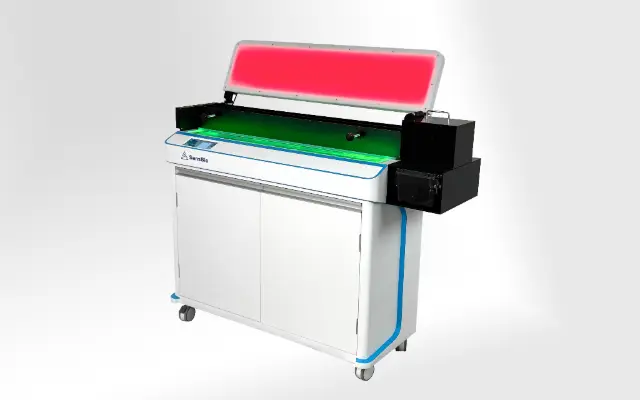
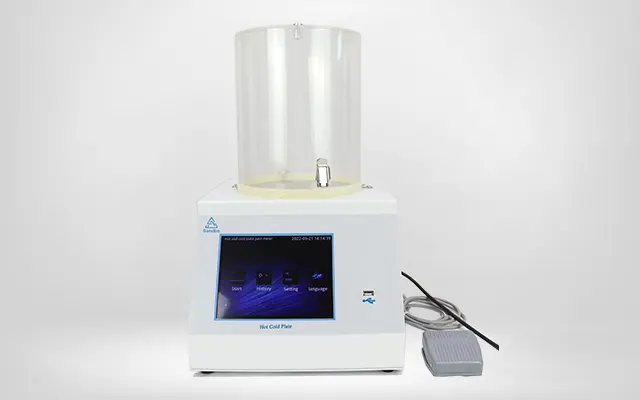
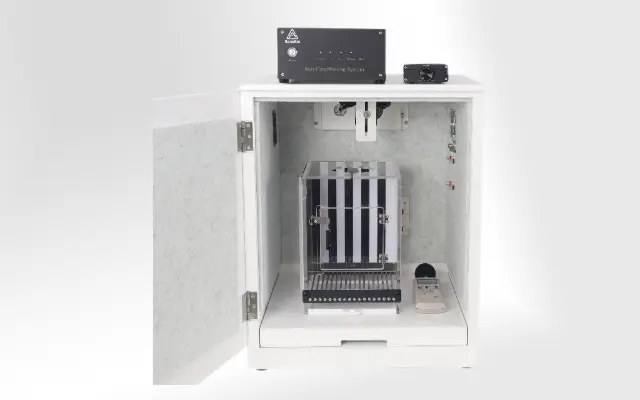
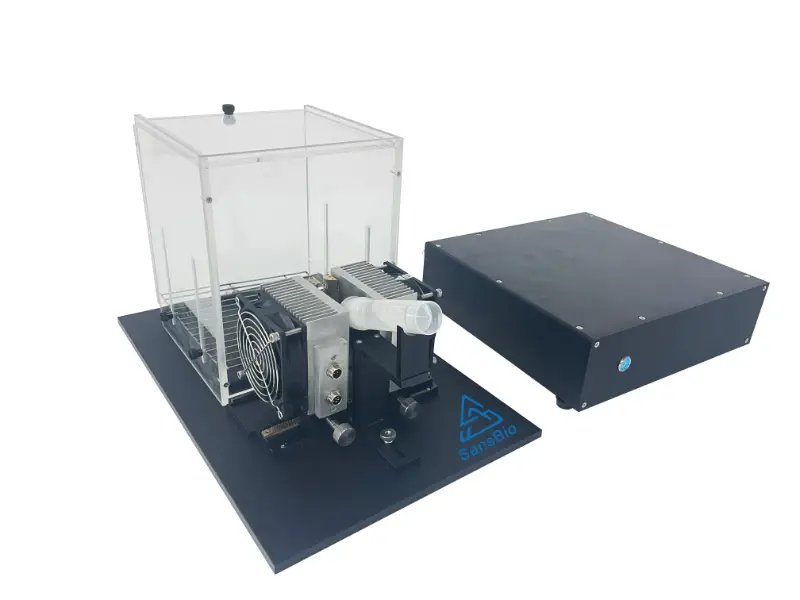
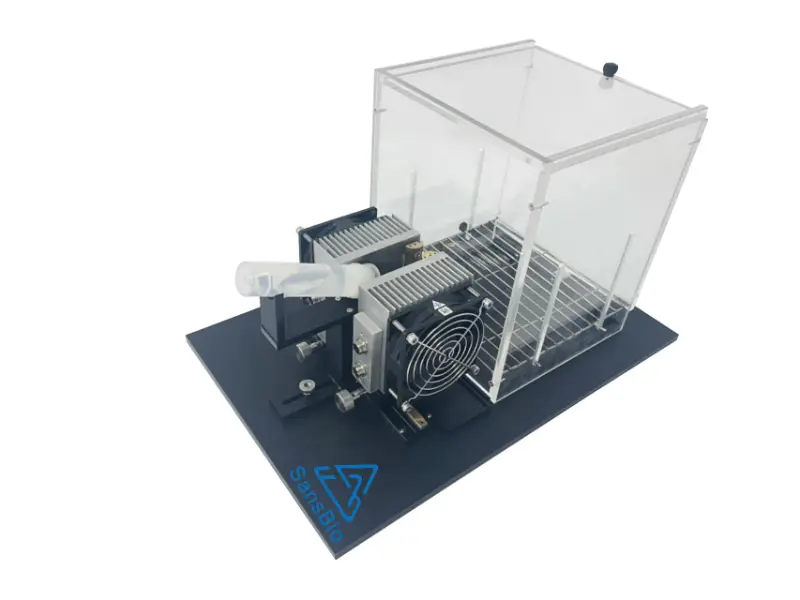
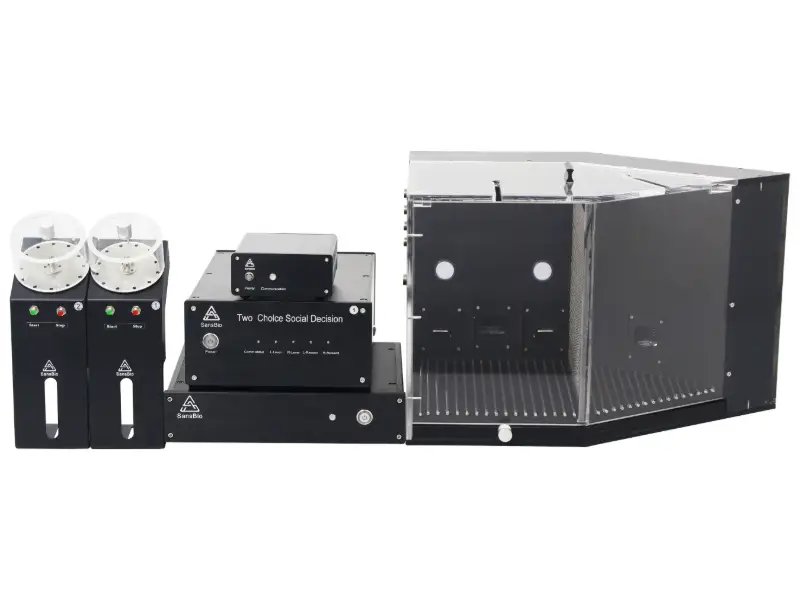
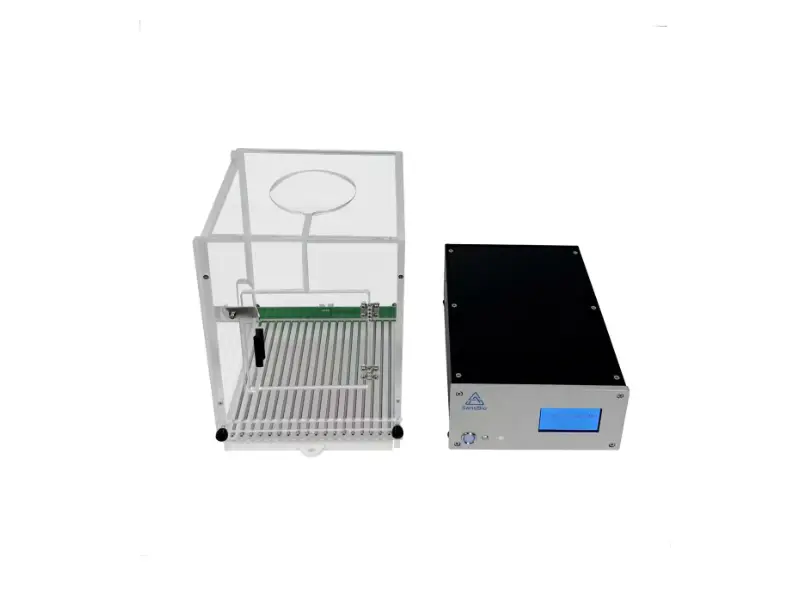
OPAD System (Orofacial Pain Assessment Device) is an automated operant pain assessment system designed for quantitative evaluation of orofacial pain behavior in rodents. The system enables researchers to investigate thermal and mechanical pain sensitivity in the mouth, nose, and facial regions of mice and rats under clinically relevant conditions. Unlike traditional reflex-based assays such as tail-flick or paw withdrawal tests, the OPAD evaluates voluntary pain-related behavior associated with reward-seeking activity. Animals are trained to access a reward bottle through a specially designed opening while contacting thermal or mechanical stimulation modules. Pain-related avoidance or feeding suppression behaviors are then automatically recorded and analyzed.
Orofacial Pain Assessment Device, automated measurement of hot, cold, mechanical orofacial pain for Rodent Trigeminal Pain Research. It is widely used in trigeminal pain research, neuropathic pain assessment, inflammatory pain studies, migraine models, temporomandibular disorder (TMD) research, and preclinical analgesic drug evaluation.
By combining automated data acquisition with operant conditioning principles, our OPAD provides a highly translational and objective solution for rodent facial pain assessment and behavioral pain analysis.
• Thermal electrodes and mechanical stimulation wires for hot, cold, and mechanical sensitivity testing
• Dual Peltier modules for precise temperature control
• Adjustable electrode spacing for mice and rats
Temperature Control
• Temperature range: 4°C to 75°C
• Temperature accuracy: ±0.5°C
• Programmable multi-step temperature settings
• Adjustable heating rate and stimulation duration
Parameters Recorded
Licking Data
• Number of licks (successful attempts)
• Duration of each lick
• Latency to the first lick
• Maximum licking duration
• Minimum licking duration
• Licking frequency
Facial Contact Data
• Face contact numbers
• Face contact duration
• Latency to the first face contact
• Maximum contact duration
• Minimum contact duration
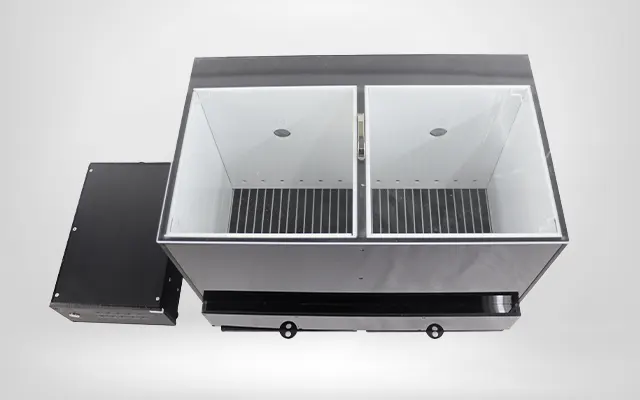
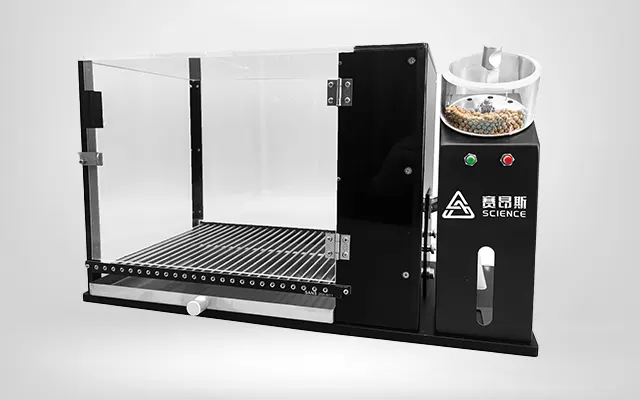
• Composed of a clear acrylic cage with a metal base.
• Dimension:
Mouse 10x 10x20 cm (Lx Wx H),
Rat 20x 20x20 cm (Lx Wx H).
Custom dimension is available.
• Removable feces and urine tray.
• Drinking bottle with metal nozzle and lick detection.
1. Multiple Pain Stimulation
The OPAD system supports thermal and mechanical stimulation, enabling comprehensive evaluation of rodent orofacial pain sensitivity under different experimental conditions. 2. Clinically Relevant Operant Pain Assay
Unlike reflexive pain tests, the system evaluates voluntary reward-seeking behavior under aversive stimulation, providing improved translational relevance to human pain conditions. 3. High-Precision Temperature Regulation
Dual Peltier-based thermal control enables accurate and stable temperature modulation from 4°C to 75°C with 0.5°C precision. 4. Automated Quantitative Analysis
The system automatically records licking behavior and facial contact parameters, reducing observer bias and improving reproducibility. 5. Flexible Experiment
Researchers can independently configure target temperature, ramp speed, and stimulation duration to accommodate diverse experimental protocols. 6. Adjustable Design for Mice and Rats
The adjustable electrode spacing allows adaptation to different rodent sizes for improved experimental consistency. 7. Rich Behavioral Data Collection
Multiple behavioral endpoints support comprehensive pain phenotyping and advanced statistical analysis. 8. Improved Experimental Efficiency
Automated operation and integrated software simplify setup, data collection, and analysis workflows.