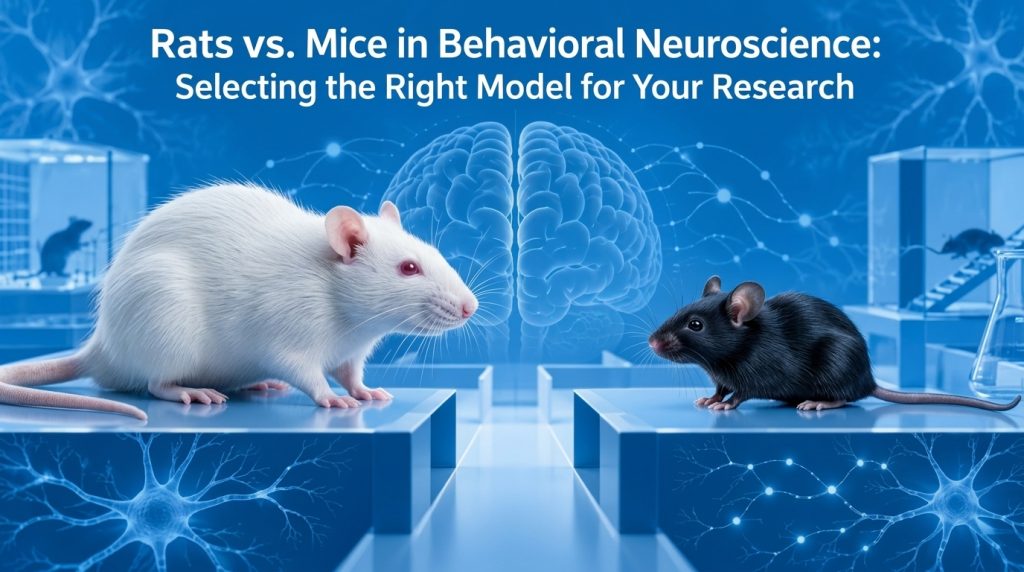
Assuming that mice and rats are interchangeable in behavioral testing is a common pitfall that can compromise experimental validity. Although both are rodents, significant differences in neurobiology, stress responses, physical scale, and social structure lead to divergent behavioral outcomes. Selecting the incorrect species introduces confounding variables, distorts data, and wastes valuable resources.
This practical guide explores how to choose between rats and mice across six primary research domains in behavioral neuroscience, helping researchers optimize protocol design and maximize translational success.
Rat vs. Mouse: A Domain-by-Domain Behavioral Comparison
Neuroscientists frequently evaluate whether subjects should be treated identically across experimental protocols. To understand why asking whether mice and rats are different matters, researchers must examine species behavior across core testing domains.
1. Motor Coordination & Locomotor Activity
Key Tasks:Treadmill, RotaRod, Grid Walk, Gait Analysis)
Rat Characteristics: Rats possess larger body mass and superior muscle control, allowing researchers to evaluate subtle gait dynamics, fine motor recovery, and complex motor learning.
Mouse Characteristics: Mice exhibit high baseline locomotion and low body weight, making them ideal for rapid endurance screening and transgenic motor deficit models.
Selection Takeaway: Choose rats for detailed biomechanical and neurological recovery studies; choose mice for high-throughput genetic screening.
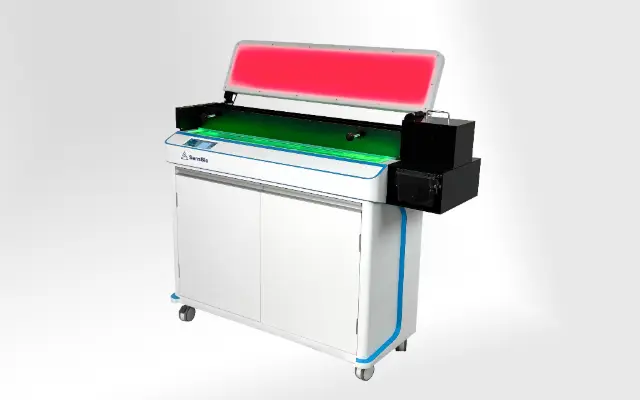
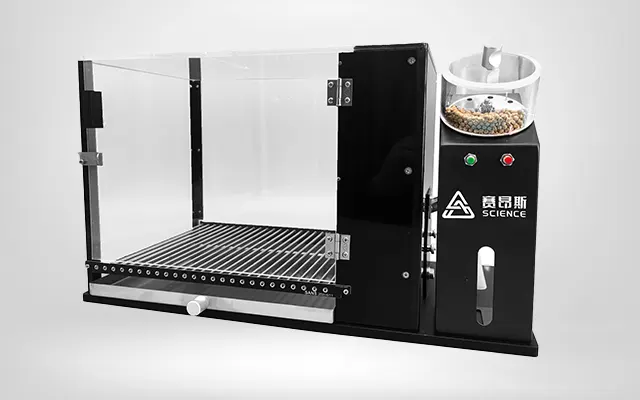
Equipment Consideration: BioMed Easy provides specialized solutions in Motory Coordination, including the RotaRod for Mice and Rats, Rodent Gait Analysis System, Rat/Mouse Treadmill etc.
2. Pain & Inflammation
Key Tasks: Hot Cold Plate, Tail Flick, Paw Pressure (Hargreaves Plantar / Von Frey), Weight Bearing Test.
Rat Characteristics: Rats offer higher pain threshold consistency. Their anatomical size allows precise mechanical paw stimulation and reliable chronic neuropathic injury models.
Mouse Characteristics: Using experimental mice is essential for genetic knockout and transgenic studies that investigate specific nociceptors and ion channels.
Selection Takeaway: Choose rats for robust pharmacological drug testing; choose mice for target validation via genetic manipulation.
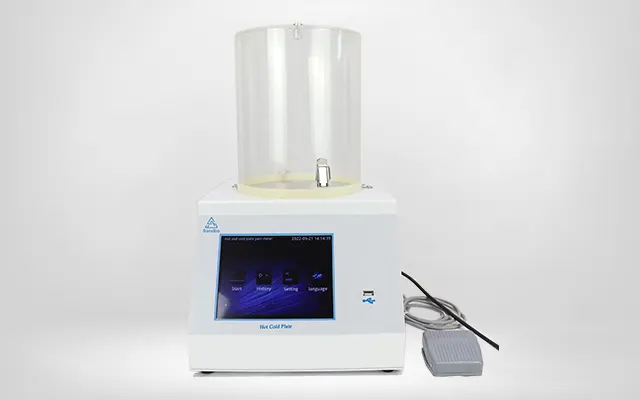
Equipment Consideration: For research in Pain and Inflammation, BioMed Easy supplies calibrated systems such as the Hot Cold Plate Test, Electronic Von Frey, Hargreaves Plantar Test, Tail Flick Test and Incapacitance Meter to deliver consistent nociceptive measurements.
3. Learning & Memory
Key Tasks: Morris Water Maze (MWM), Barnes Maze, Novel Object Recognition (NOR), Radial Arm Maze, Shuttle Avoidance Test, Skinner Operant Chamber.
Rat Characteristics: Rats are natural swimmers that experience lower stress responses in water. They utilize complex spatial navigation strategies and demonstrate superior cognitive capacity for multi-stage operant tasks.
Mouse Characteristics: Mice experience high water-induced stress that frequently triggers floating behavior in the Morris Water Maze. Dry mazes like the Barnes Maze or passive avoidance tasks yield much cleaner behavioral data for mice.
Selection Takeaway: Choose rats as the primary standard for complex cognitive and spatial memory; opt for dry-maze protocols if using mice.
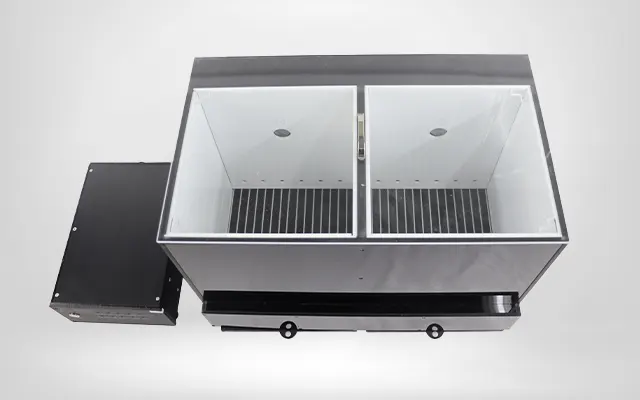
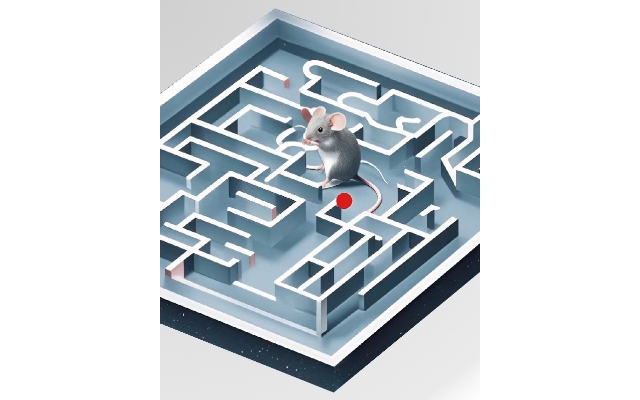
Equipment Consideration: In the domain of Learning & Memory, BioMed Easy manufactures robust research setups including the MORRIS Water Maze, Barnes Maze, Eight Arm Radial Maze, T-Maze, and Y-Maze paired with advanced Video Tracking software to quantify search strategies automatically.
4. Anxiety, Fear & Emotion
Key Tasks: Elevated Plus Maze (EPM), Light/Dark Box, Fear Conditioning, Acoustic Startle Reflex, Open Field, Sucrose Preference Test.
Rat Characteristics: Rats are highly social creatures that display predictable fear-extinction paradigms and maintain a stable baseline in complex emotional or social interaction assays.
Mouse Characteristics: Mice are extremely sensitive to environmental novelties, light intensity changes, and experimenter handling. They excel in innate fear and acoustic startle response studies.
Selection Takeaway: Account for mouse hyper-reactivity to environmental variables; utilize rats for higher-order emotional and social anxiety modeling.
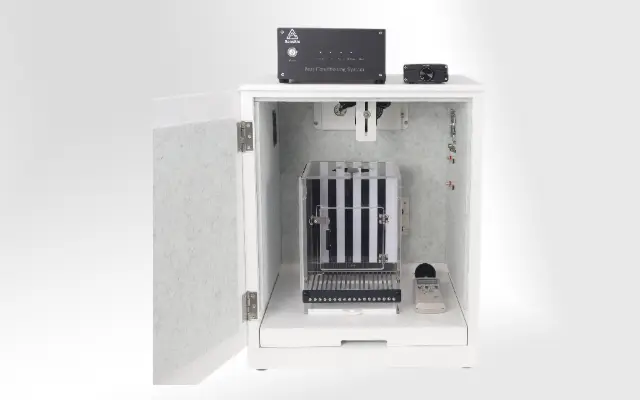
Equipment Consideration: To study Anxiety, Fear & Emotion, BioMed Easy offers precision hardware including the Elevated Plus Maze, Dark Light Box, Fear Conditioning System, and Startle Reflex System with integrated sound-attenuation chambers that eliminate environmental confounding variables.
5. Reward & Addiction
Key Tasks: Intravenous Self-Administration (IVSA), Conditioned Place Preference (CPP).
Rat Characteristics: Rats represent the gold standard for IVSA due to their vascular size, which supports surgical catheter stability and long-term operant schedules.
Mouse Characteristics: Mice are widely utilized in Conditioned Place Preference protocols paired with cell-type-specific optogenetic or chemogenetic manipulations.
Selection Takeaway: Choose rats for long-term self-administration and drug escalation protocols; choose mice for circuit-specific mechanistic dissection.
Equipment Consideration: For investigations into Reward & Addiction, BioMed Easy designs modular Skinner Operant Chamber, Touch Screen Operant Chamber, Self-Administration equipment, and Conditioned Place Preference (CPP) chambers engineered with precise infusion and delivery mechanics.
6. Food, Drink & Metabolism
Key Tasks: Automated Feeding/Drinking Monitors, Metabolism Monitor.
Rat Characteristics: Rats exhibit stable circadian intake patterns, making them ideal for diet-induced obesity studies and long-term metabolic monitoring.
Mouse Characteristics: Mice have a high metabolic rate, making them vulnerable to rapid weight loss during brief fasting periods alongside high diurnal variability.
Selection Takeaway: Ensure mouse fasting protocols are tightly calibrated; choose rats for quantitative metabolic and feeding behavior stability.
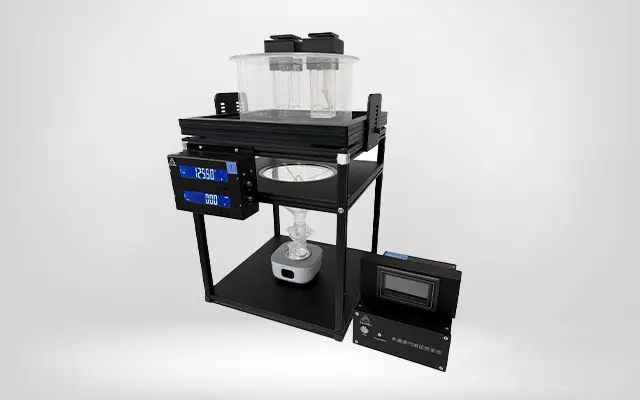
Equipment Consideration: To support studies in Food & Drink, Metabolism, BioMed Easy provides high-precision instruments, including the Metabolism Monitoring System, Rodent Metabolic Cages, and the IVC Food & Drink Intake Monitoring System—engineered to record continuous intake data.
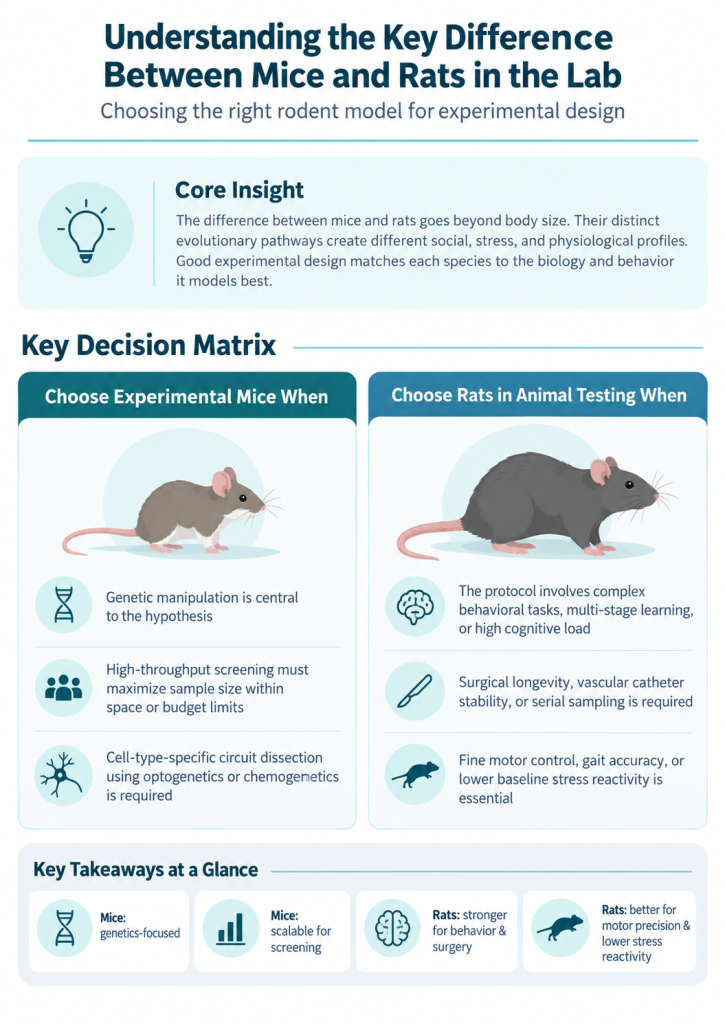
Understanding the Key Difference Between Mice and Rats in the Lab
The fundamental difference between mice and rats extends beyond simple physical size. Their evolutionary pathways created distinct social, stress, and physiological profiles. Recognizing how rats in animal testing differ from mouse models ensures that experimental protocols match species-specific biology rather than forcing animals into unsuitable behavioral tests.
Key Decision Matrix: Experimental Mice vs. Rats in Animal Testing
Choose Experimental Mice When:
- Genetic manipulation, such as knockout or transgenic modeling, is central to the experimental hypothesis.
- High-throughput screening requires maximizing sample sizes within space or budget constraints.
- Cell-type-specific circuit dissection using optogenetics or chemogenetics is necessary.
Choose Rats in Animal Testing When:
- Experimental protocols involve complex behavioral tasks, multi-stage learning, or high cognitive load.
- Surgical longevity, vascular catheter stability, or serial sampling is required.
- Fine motor control, gait accuracy, or lower baseline stress reactivity is essential for valid measurements.
Conclusion: Matching Your Research Model with BioMed Easy Systems
Matching your behavioral domain to the right rodent model directly dictates data reproducibility and translational success. Whether an experimental protocol requires rat spatial navigation in water mazes or mouse automated motor tracking, choosing the correct model lays the foundation for reliable scientific discovery.
BioMed Easy provides comprehensive, high-precision behavioral research systems engineered for both species. From optimized water and dry mazes to advanced video tracking, operant chambers, and metabolic units, BioMed Easy empowers neuroscientists to extract clean, repeatable data across all six behavioral research domains. Visit BioMed Easy to explore our complete catalog of laboratory animal equipment and elevate your neuroscience research today.