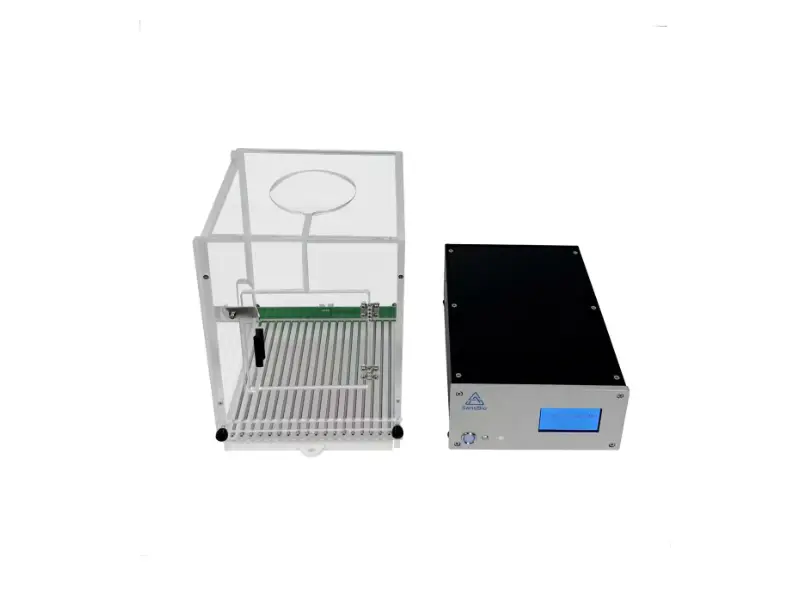
Shuttle Avoidance Test, also call Active Avoidance/Passive Avoidance Test, is common used in neuroscience to assess different forms of fear-based conditioned avoidance learning in rodents.
Active Avoidance Test (also called shuttle box or automatic reflex conditioner), i.e. learning to predict the occurrence of an aversive event, based on the presentation of a specific stimulus, like sound, light and electricity.
Passive Avoidance Test requires performing a specific behavior in order to escape or avoid the aversive stimulus, represented by mild foot shock.
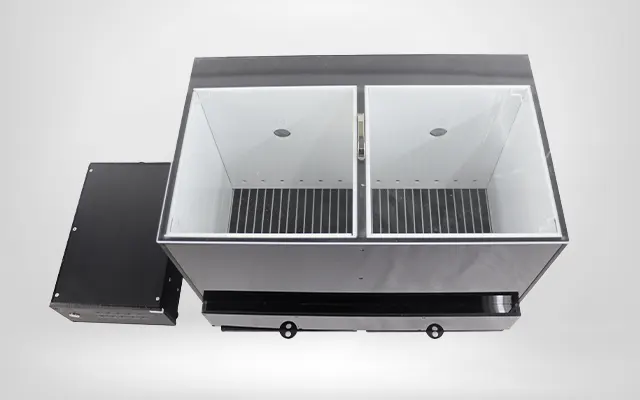
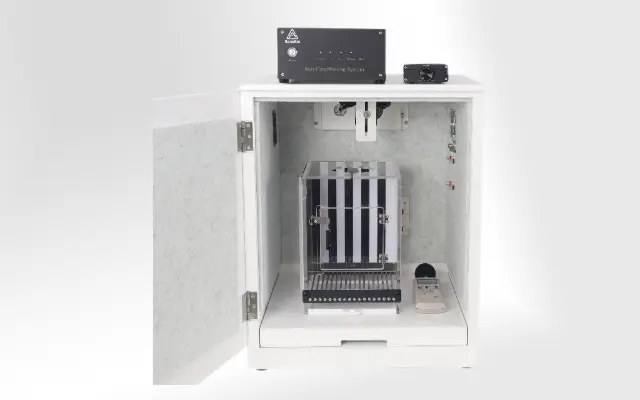
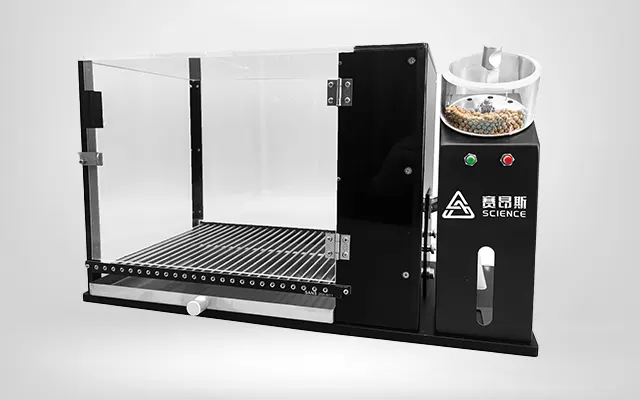
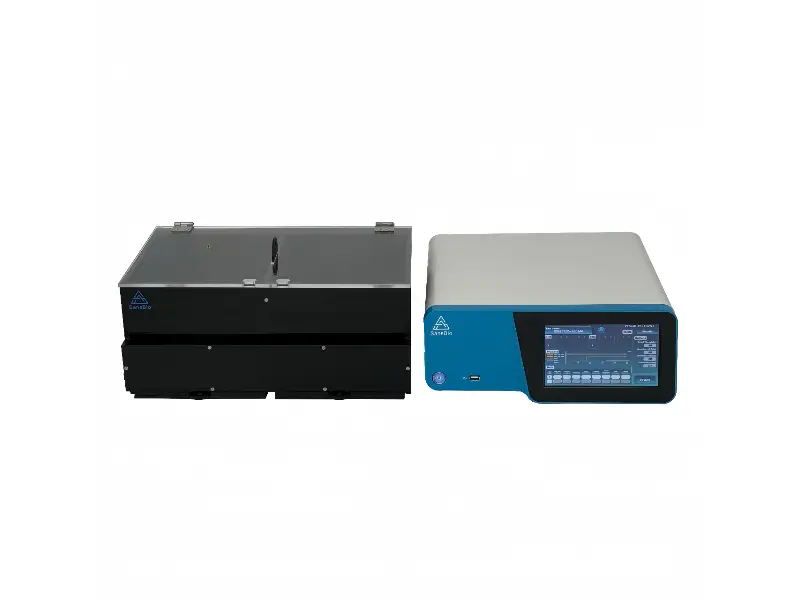
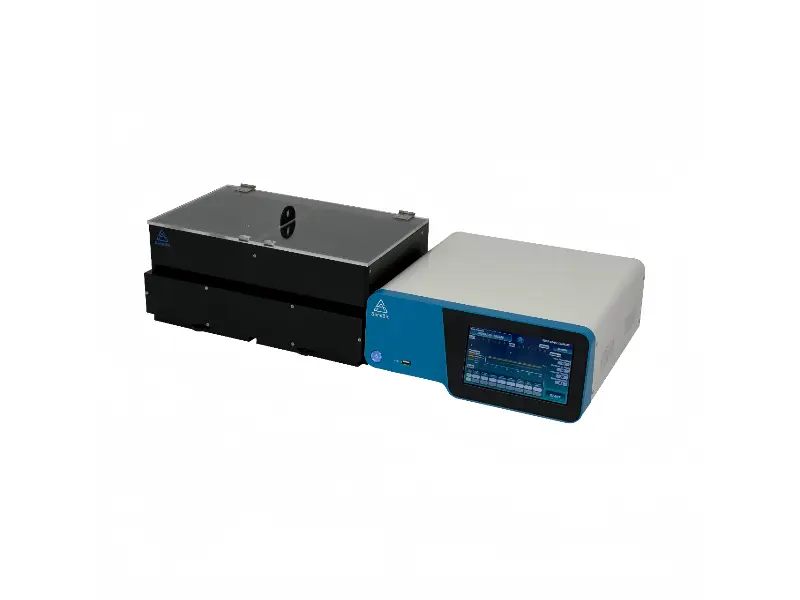
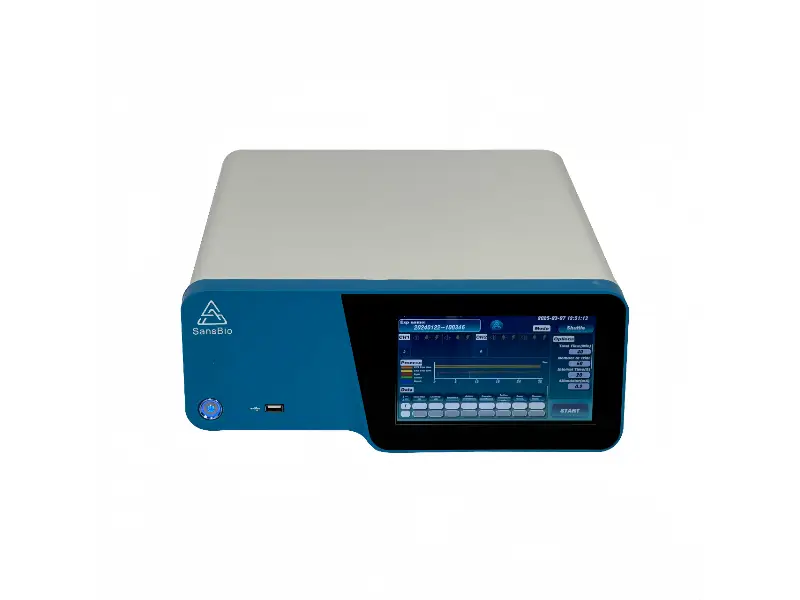
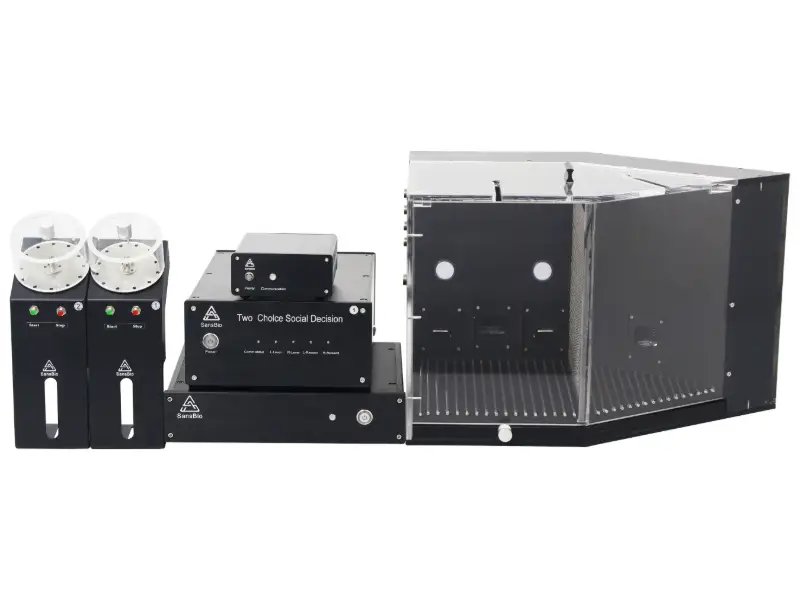
SANS Shuttle Avoidance Box is a flexible system for both active and passive avoidance experiments. It comes with two independent grid floors that allow for flexible adverse stimuli. A top-loading door allows easy access inside the box. The chamber contains a sound generator and a visual stimulus (light) that functions separately for each compartment. Software can be directly operated in the controller.
Shuttle Avoidance Test
When an aversive stimulus is applied, the subject learns to avoid the aversive stimulus by moving to the other side of the two-compartment chamber after the presentation of the stimulus.
Passive Avoidance Test
After the motivation or training, the subject is forced to move to the preferred side of the two-compartment chamber. Then it confined to the dark portion of the chamber, and experiences inescapable aversive stimulus.
Application
1. Active Avoidance (Shuttle Test)
• Dual-compartment shuttle learning
• Conditioned avoidance via sound/light CS and foot-shock US
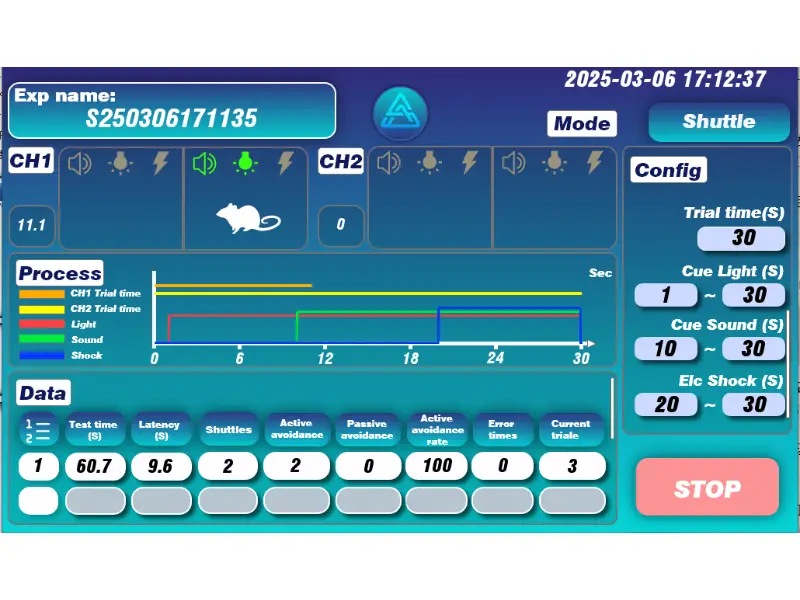
• Measures escape, avoidance, latency, and learning curve
2. Passive Avoidance
• Tests memory retention and inhibitory learning
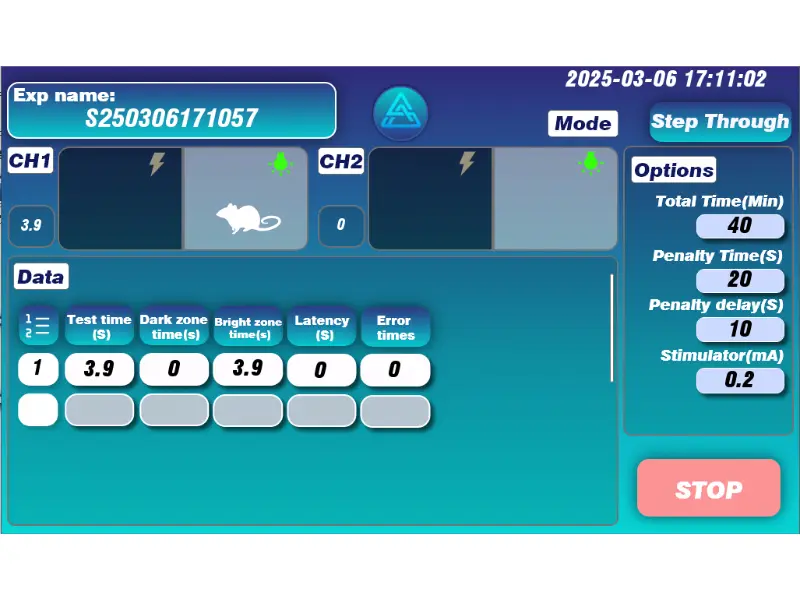
• Measures latency to enter dark/light compartment after previous shock
• Electricity Shock: 0.05 ~5mA, using pulse current, deviation 0.01MA
• Test times: 1~9999min
• Interval: 1~9999s
• Electric shock/sound/light time: 0~9999s
Data Record
• Test time(s) • Latency(s) • Shuttle times
• Active avoidance times • Passive avoidance times • Current trial
• Active avoidance rate • Error times
• Applicable for Rats and Mice in Shuttle and Passive Avoidance Test.
• Stimuli: Sound, Light, Shock at any combination.
• Automated detection with highly density infrared scanning technology, well solve slow response, blind area, poor anti-interference ability and ensure signal accuracy.
Software
• Independent signal detection control in each box to precise detect the signal in the experiment.
• Separate controller for operating the software, no need for PC operation.
• Suitable for Shuttle, Passive Avoidance test.
• Data can be exported to .csv format in PC for further analysis.
• Automatically saves 3000 sets of experimental data. Exportable for csv. format.
• Real-time display of processing timing diagram.
• Control unit in 1024*600 IPS capacitive touch screen.
Q1. What is a shuttle box and how does it work?
Shuttle Box Test is a widely used rodent behavioral testing system designed to evaluate fear conditioning, learning and memory, and avoidance behavior in mice and rats.
In a typical two-way shuttle box, rodents learn to avoid an aversive stimulus (e.g., foot shock) by moving between compartments in response to conditioned stimuli such as light or sound.
This paradigm supports both:
• Active Avoidance Test (predictive escape behavior)
• Passive Avoidance Test (inhibitory learning & memory retention)
Q2. What is the difference between Shuttle Avoidance Test, Active Avoidance Test, and Passive Avoidance Test?
The Shuttle Avoidance Test is a broad term encompassing both Active Avoidance Test and Passive Avoidance Test, widely used in rodent behavioral testing systems for studying fear conditioning and learning.
• Active Avoidance Test (Shuttle Box Test): Animals learn to actively move (shuttle) between compartments to avoid an aversive stimulus (e.g., shock, sound, light).
• Passive Avoidance Test: Animals suppress natural behavior (e.g., entering a dark compartment) to avoid punishment.
Q3. What types of stimuli can be applied in the Shuttle Box Test?
The SA222 Shuttle Box Test supports flexible multi-modal stimuli, critical for fear conditioning test protocols:
• Electric shock: 0.05–5 mA, high-precision pulse current (±0.01 mA deviation)
• Sound stimulus
• Light stimulus
Q4. How does the shuttle avoidance test ensure accurate detection of rodent behavior?
Our shuttle box uses high-density infrared tracking avoidance test technology, enabling:
• Precise detection of shuttle movement
• Elimination of blind spots
• Strong anti-interference capability
• Reliable signal acquisition even in subtle or slow movements
Q5. Does the SA222 Shuttle Avoidance Test require a PC for operation?
No. The SA222 features a standalone controller and can use it independently with 2 chambers:
• 1024×600 IPS touchscreen
• Embedded software operation
• No PC required during experiment
Q6. How is data managed and stored?
The system supports:
• Automatic storage of up to 3000 experimental datasets
• Real-time visualization via timing diagrams
• Export to CSV for statistical analysis
Q7:What is the difference between the SA222 Shuttle Avoidance Test and SA223 Automated Shuttle Avoidance Test?
SA222 Shuttle Avoidance Test is a basic 2-channel stand-alone unit without door automation, with UI software design. SA223 Automated Shuttle Avoidance Test provides automated door control, PC-based multi-protocol software, and up to 32 channels.