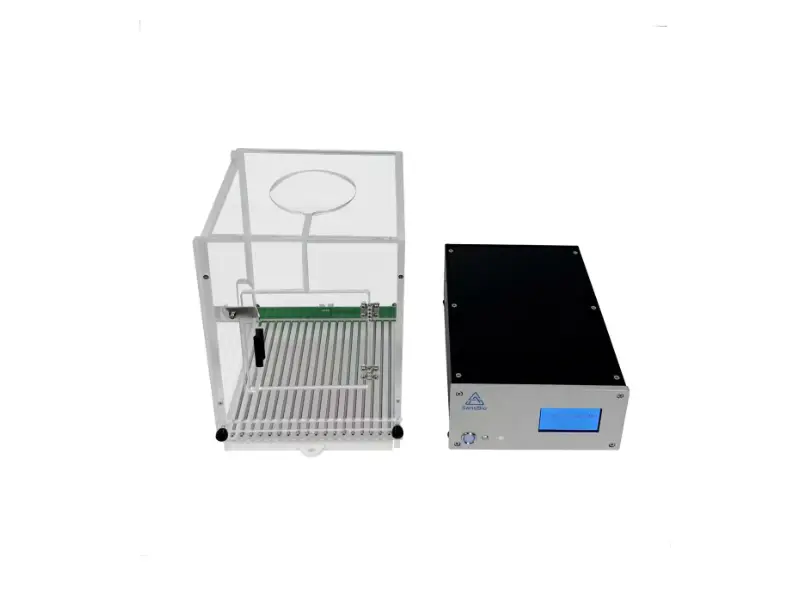
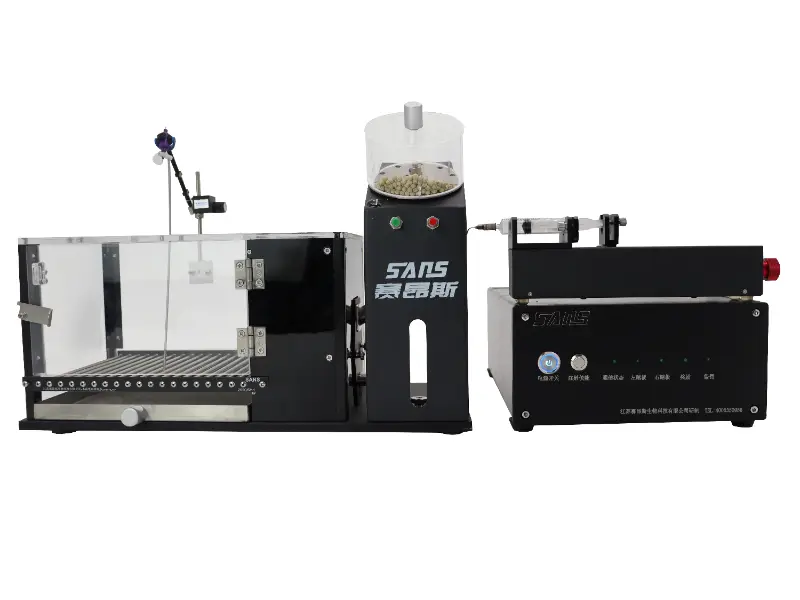
Self-administration is a common method in behavioral pharmacological, reward-seeking and addiction behavior research. It provides perfect scientific research protocol for the qualitative and quantitative analysis and evaluation of drug psycho-dependence. Based on the positive reinforcement effect of some drugs and under the certain conditions, animals can obtain certain incentive operations after performing the specified actions and steps set by the experimental program, thus behavior and reward can be connected, which is to simulate human drug abuse situation.
The principle of self-administration testing is based on Skinner’s operant test, in which the animal receives the drug through an unintended action (such as by pressing pedal or lever bar), the euphoria of the drug reinforces the animal’s continued pedaling behavior, and eventually, through continuous drug reinforcement, the animal learns to actively seek the drug. The process of establishing operant conditioning is usually accompanied by sound stimulation or/and light stimulation to enable the animal to acquire conditioned reinforcement. The self-administration adopts the intravenous administration as this administration allows the drug to enter the brain quickly and makes it easier to associate the behavior (such as pressing pedal or lever bar) with immediate drug action.
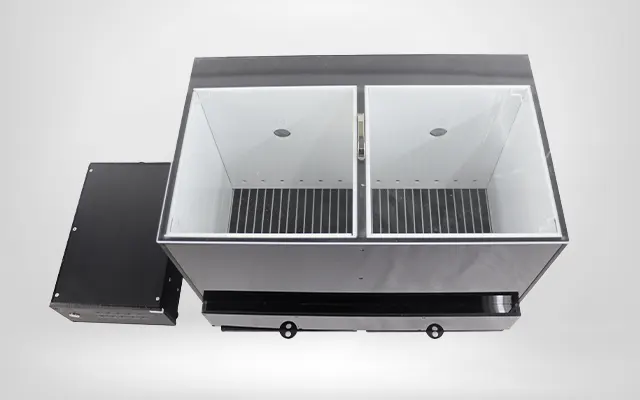
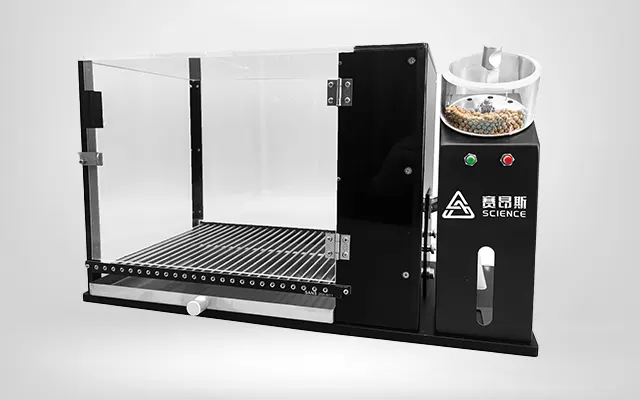
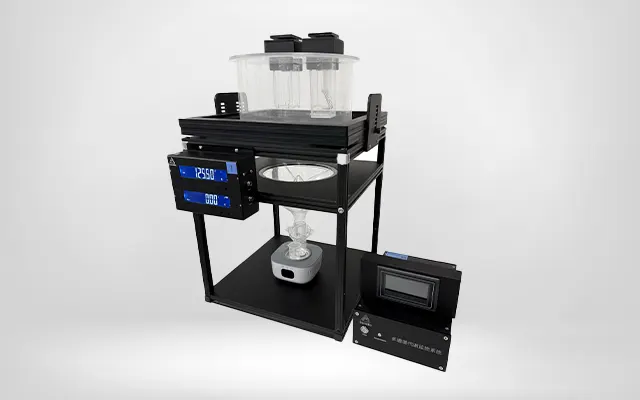
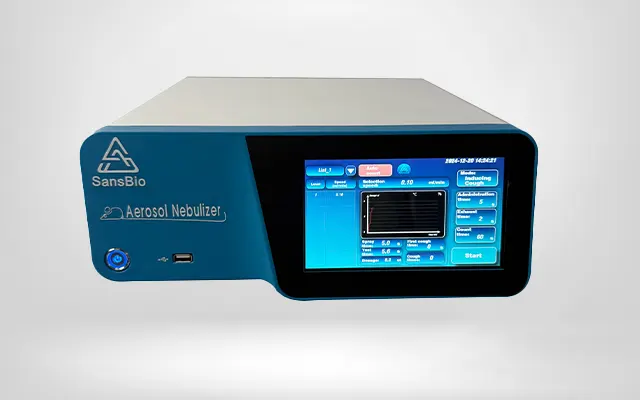
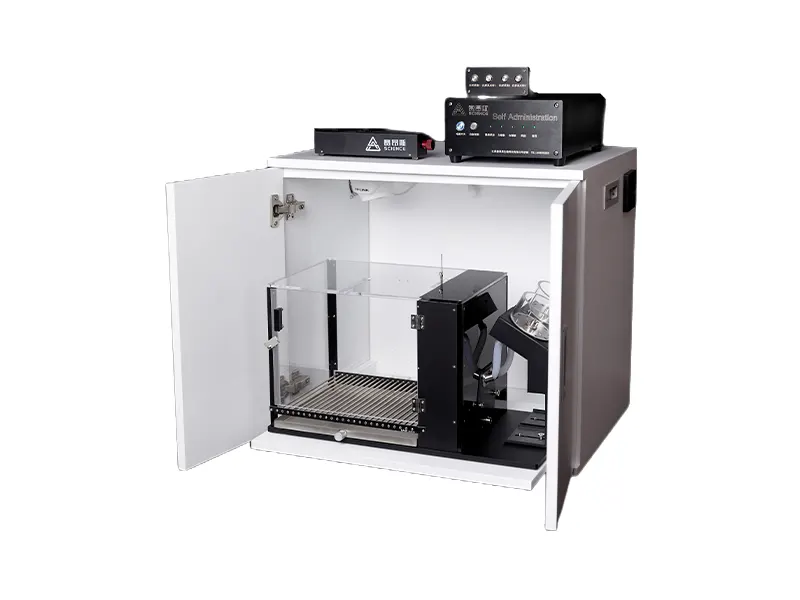
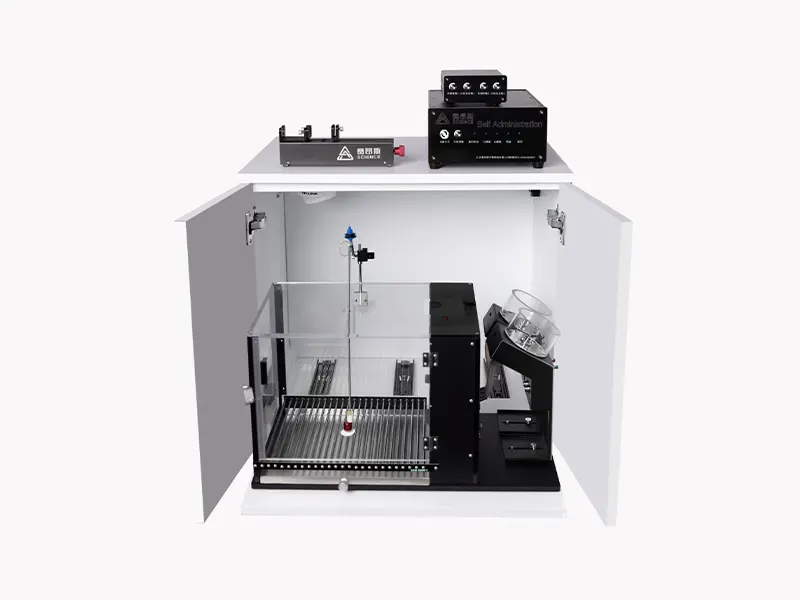
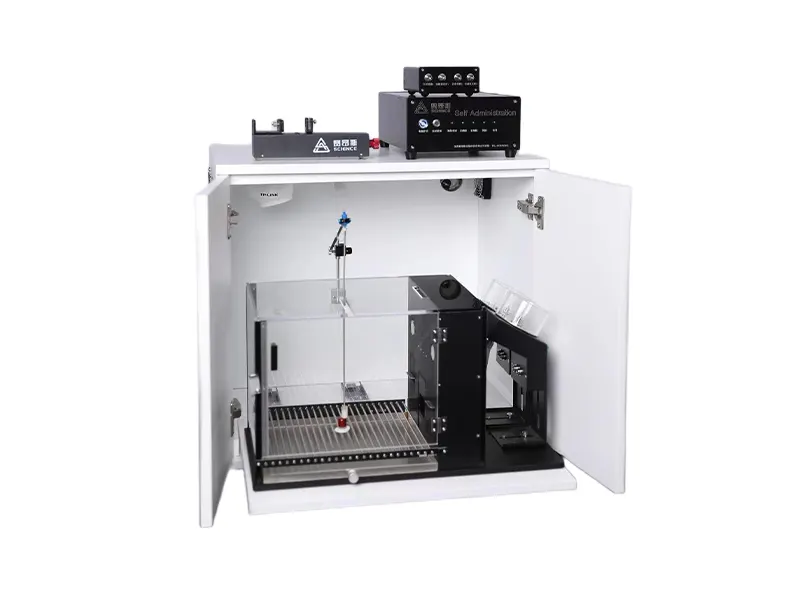
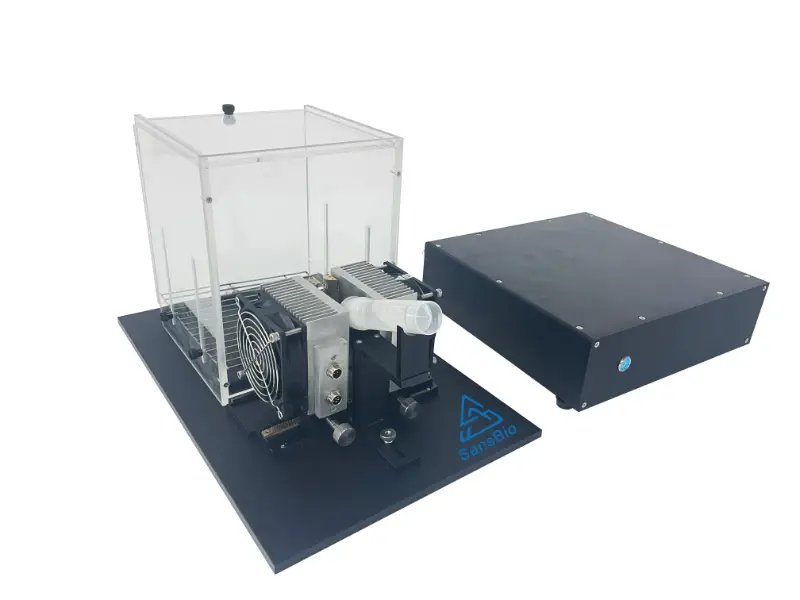
Our chamber offers everything needed for operant lead self-administration assessments associated with food restriction and intravenous drug administration. It equips with analysis software, controller, a sound-attenuating cubicle with light/fan, a syringe pump system, drug delivery package, a cage with two portlights and retractable levers, a shock floor grid, and two pellet receptacles etc.
Application
Drug addiction research: Cocaine, morphine, nicotine, alcohol self-administration models. Behavioral neuroscience: Reward-seeking and reinforcement learning studies. Pharmacological evaluation: Assess drug psycho-dependence and therapeutic compounds. Operant conditioning studies: Lever pressing, stimulus-response, and reinforcement analysis. Rodent models: Self-administration in rats and mice, intravenous and oral paradigms.
Features & Benefits
High-throughput software: Manage up to 32 cages simultaneously
Wireless connectivity: Stable signal transfer, minimal wiring
Video monitoring: Real-time animal observation & data recording
Sound & light cues: Support operant conditioning and reinforcement protocols
Modular design: Easy assembly, cleaning, and flexible configurations
Precise drug delivery: Programmable syringe pump ensures accurate dosing
Multi-species compatibility: Suitable for both rats and mice
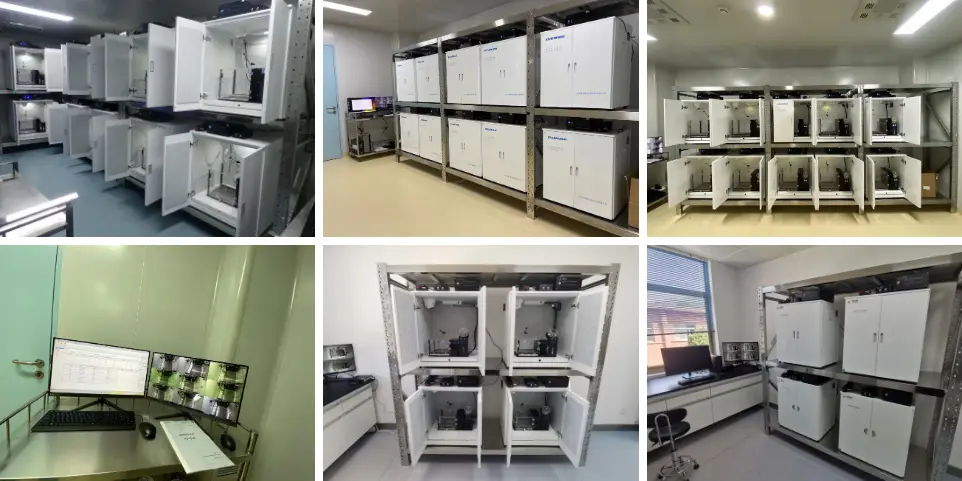
Software can support up to 32 self-administration cages.
Independent signal detection control in each box to precise detect the signal in the experiment.
Each secondary controller comes with various signal indicator, experiment process can be accurately judged through the indicator without opening the insulation box, thus to reduce the human interference.
Each self-administration cages is connected to the controller through latest technology like wireless connection.
Simple and easy wire connections.
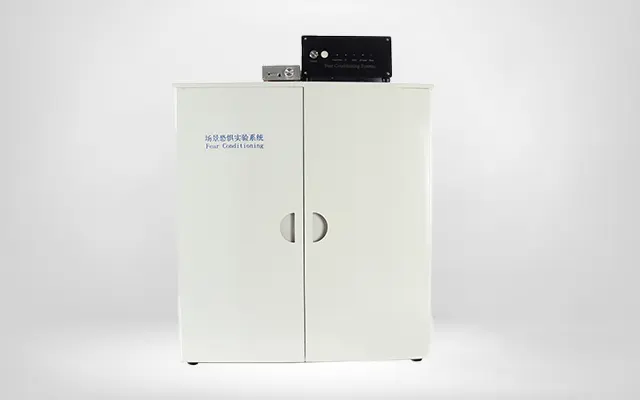
Sound Attenuation Cubicle & Accessories
Sound Attenuation Cubicle: Double hollow PVC board, with multi-layer sound-proof insulation material that attenuates environment disturbance, six sides fire retardant sound insulation board in inner wall. Sound insulation > 35dB.
General size 625 x535 x690mm. Easy to clean, resistant to stains and moisture.
Fan: Programmable 12V,500MA DC. Used as ambient background noise, can also be used for ventilation, dust cover included.
Camera: Researcher can observe the animal status and save the experiment video in real time, avoid the negative impact on the experiment caused by opening the door or the window to observe the animal during the experiment.
Lighting: Power 5w, color temperature 6500K, manually opened.
Test Chamber
Circular hole is equipped in the top cover that allow the tethered drug delivery system and fiber optic EEG electrodes to easily enter the room.
Integrated operant chamber.
Mouse chamber 20 x 17x 12 cm (width x depth x height)
Rat chamber 29 x 24 x 23 cm (width x depth x height)
Stainless Steel Grid Floor
4mm metal rods, Rat and Mouse have different space, support plantar electrical stimulation. Easy disassemble and clean.
The grid current ranges from 0 to 4.0 mA, with step 0.01 mA.
Electric shock duration 1ms-655s, shock interval and duration can be set according to the experiment.
Transformer transverse current electrical stimulation. The voltage is automatically adjusted according to the dry and wet condition of the animal body surface. Maximum excitation voltage is 250V DC.
Mouse: 200x200mm, Rat: 250x250mm
LED House Light
Programmable full color RGB_LED room light, color brightness can be adjusted and can be set to associate with the reward.
Stimulus Light
Programmable full color RGB_LED stimulation light, color brightness can be adjusted.
Sound Frequency
Frequency tone 200-5,000Hz frequency; time 0.1~60s.
Independent sound frequency and volume control for each chamber.
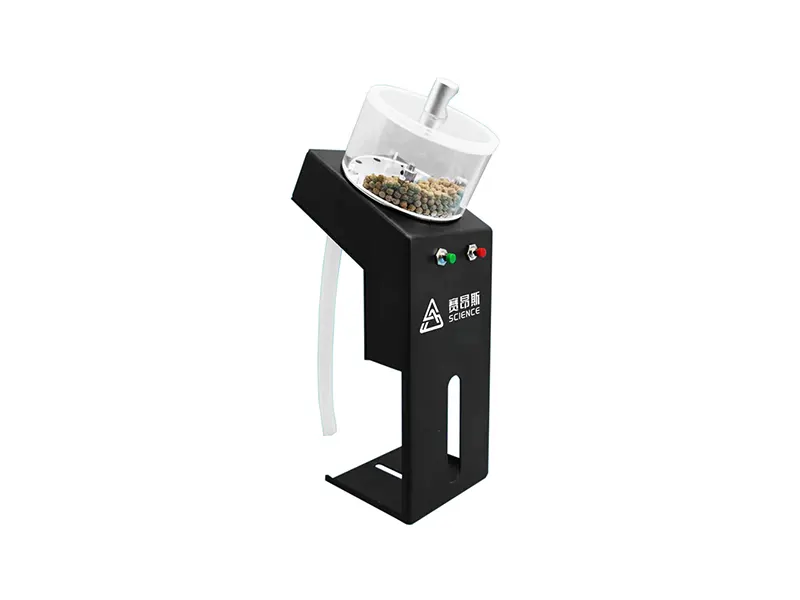
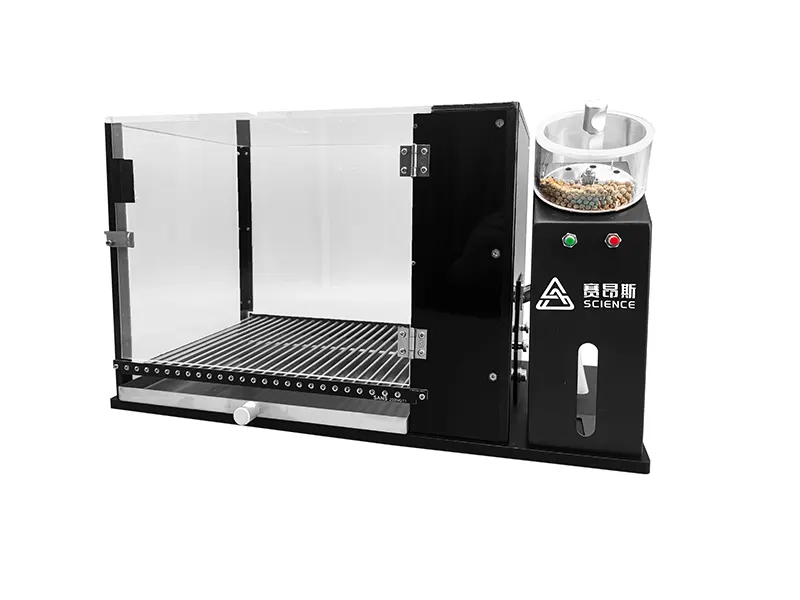
Pellet Dispenser
Support 20mg or 45mg Bio-Serv pellet, 45 mg pellet dispenser is the default choice. 20mg pellet is available.
Food detection function to ensure perfect delivery of one standard pellet.
Support manual feeding training, and manual feeding stop.
With food shortage feedback function, if no detect after three deliveries, missing food data will be uploaded to remind the researchers to add pellet.
Pellet Receptable Trough
Modular design, easy disassemble.
Equip with food drop detection, animals can explore Head Entry Detector.
Super high food trough opening is optional, to use in the animals with probe.
Lever
Fixed ultra-sensitive stainless lever.
The weight for the mouse 3g, rat 25g.
Friction shaft, with limit position protection function, non-contact sensor to detect the signal output of the lever.
Programmable Syringe Pump
For precise administration of fluids and drugs through programmable control.
Suitable for multiple flow rates continuous or when flow rates need to vary during experiments.
Applicable on drug testing, catheters flushing, electrolyte therapy, and sucrose gradients etc.
Injection time is calculated automatically by the speed and the dosage of a single dose.
Self-administration is a gold-standard model in addiction research and behavioral pharmacology. It has been widely cited in studies exploring the neurobiological mechanisms of drug dependence, reinforcement learning, and reward-related behaviors. This method is extensively used in preclinical evaluations of drug abuse potential and therapeutic interventions.
Q1. What is a Rat/Mouse self-administration system used for in neuroscience research?
A rodent Self-Administration is primarily used in behavioral pharmacology, addiction neuroscience, and reward-seeking behavior research. It allows researchers to study how animals voluntarily administer drugs or rewards through operant conditioning paradigms such as lever pressing or nose poking.
This type of operant conditioning chamber is widely used for:
• Drug addiction studies
• Cocaine, morphine, nicotine, and opioid dependence research
• Dopamine reward pathway investigations
• Relapse and reinstatement models
• Learning and reinforcement studies
• Motivation and compulsive behavior analysis
Q2. How does a self-administration experiment work?
A self-administration test is based on the classic Skinner operant conditioning principle. In a typical experiment:
The animal presses a lever or nose poke.
The system delivers a reward, such as, Intravenous drug infusion, Food pellet, Sucrose solution.
Cue lights or sound stimuli reinforce the association.
The animal learns that a specific behavior produces a rewarding outcome.
Q3. How does the programmable syringe pump improve self-administration experiment accuracy?
The programmable syringe pump ensures highly precise and repeatable drug delivery during self-administration experiments. Single-dose range from 0.001 ml–1 ml with stable intravenous drug infusion.
Accurate infusion control improves data consistency in self-administration and self dependance, ensure GLP-compliant research outcomes.
Q4. Can the self-administration software support large-scale behavioral experiments?
Yes. The software supports up to 128 self-administration chambers simultaneously, making it ideal for high-throughput behavioral pharmacology laboratories.
Q5. What behavioral data can be collected during a self-administration experiment?
The self-administration software records comprehensive behavioral and reward-related data, including:
• Total lever presses
• Effective lever responses
• Ineffective lever responses
• Left/right lever activity
• Infusion times
• Infusion volume
• Pellet reward count
• Shock frequency and duration
• Event timestamps
• Reward status
• Head entry detection
These metrics help researchers evaluate:
• Reinforcement learning
• Drug craving intensity
• Motivation levels
• Behavioral extinction
• Relapse behavior
• Compulsive reward-seeking patterns
Q6. How does the pellet dispenser ensure reliable reward delivery in self administration or drug discrimination?
The automated pellet dispenser uses closed-loop detection technology to guarantee accurate food reward delivery. It compatible with 20 mg and 45 mg pellets, and ensure one food drop detection.