Home » Product » Auto Shuttle Avoidance Test/Learned Helplessness
Auto Shuttle Avoidance Test/Learned Helplessness
The shuttle box test is widely used in neuroscience and behavioral research to study conditioned avoidance learning in rodents. Our shuttle avoidance system SA223 supports both active avoidance test and passive avoidance test paradigms, using controlled sound, light, and electrical foot-shock stimuli.
In an active avoidance paradigm, animals learn to move between compartments in response to a conditioned stimulus to avoid an aversive event.
In a passive avoidance paradigm, animals learn to avoid entering a compartment associated with an aversive stimulus.
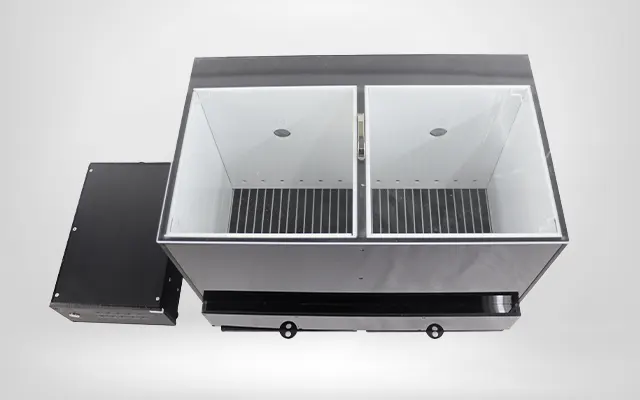
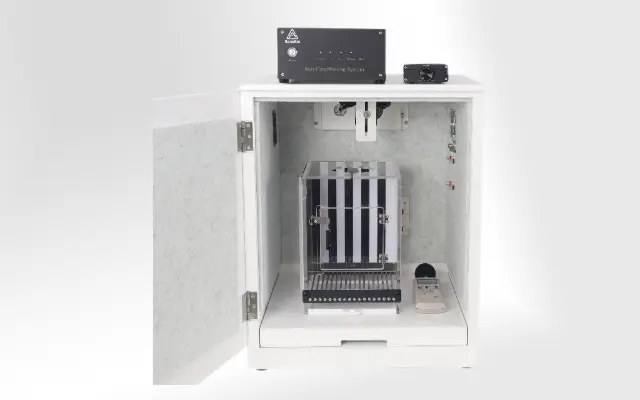
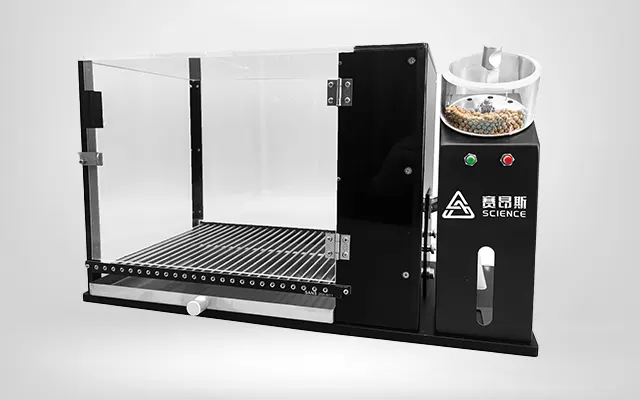
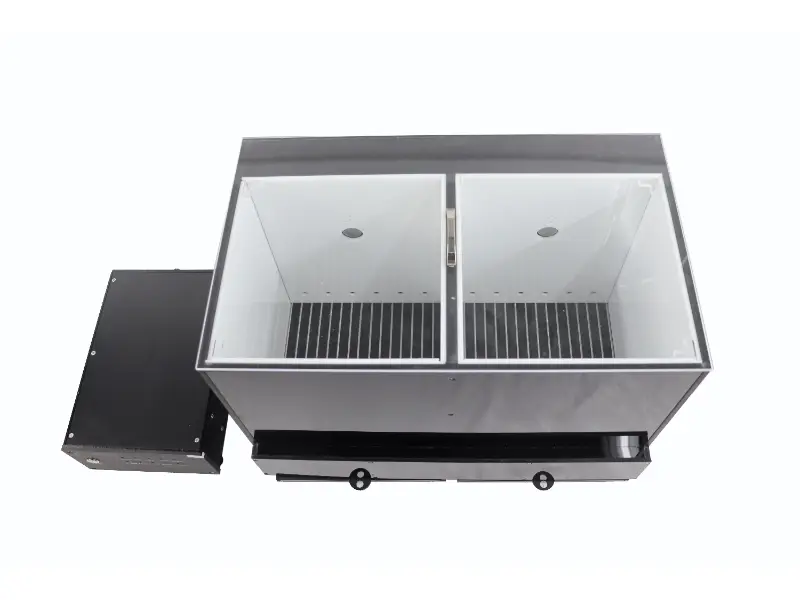
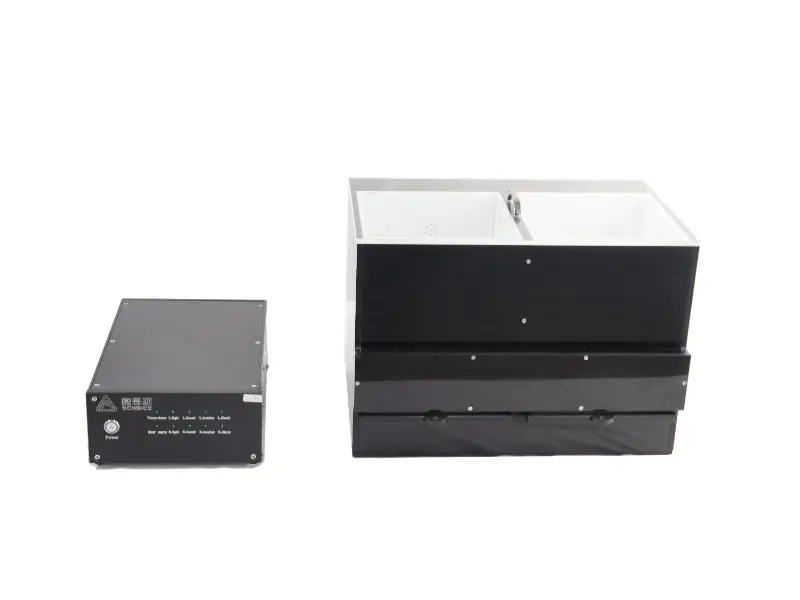
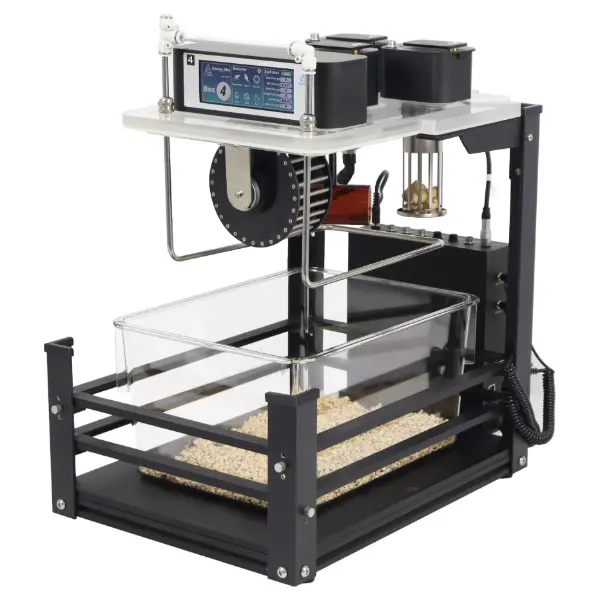
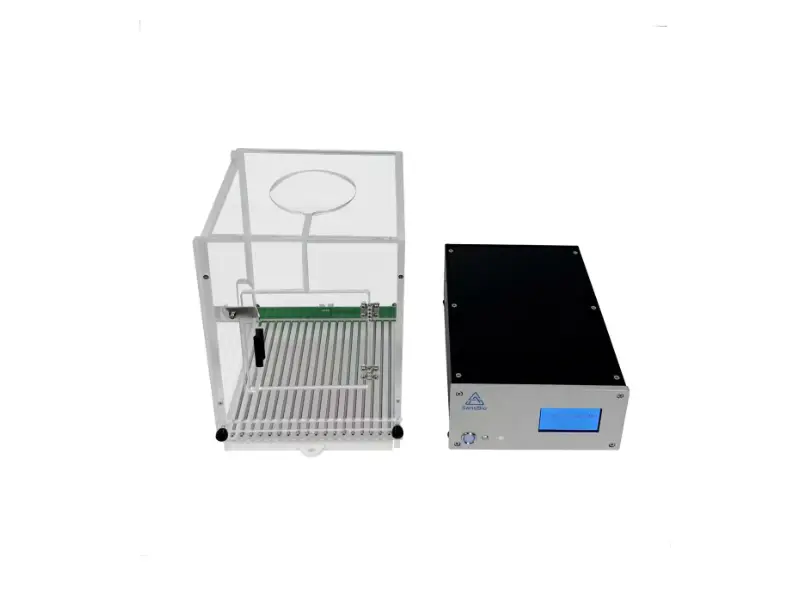
The Automated Shuttle Avoidance Box is a flexible system for active avoidance, passive avoidance, and learned helplessness experiments. It features two independent chambers with grid floors for controlled aversive stimulation. An automatic door is integrated into each chamber to open and close according to the experimental protocol, helping reduce the influence of human interaction during testing.
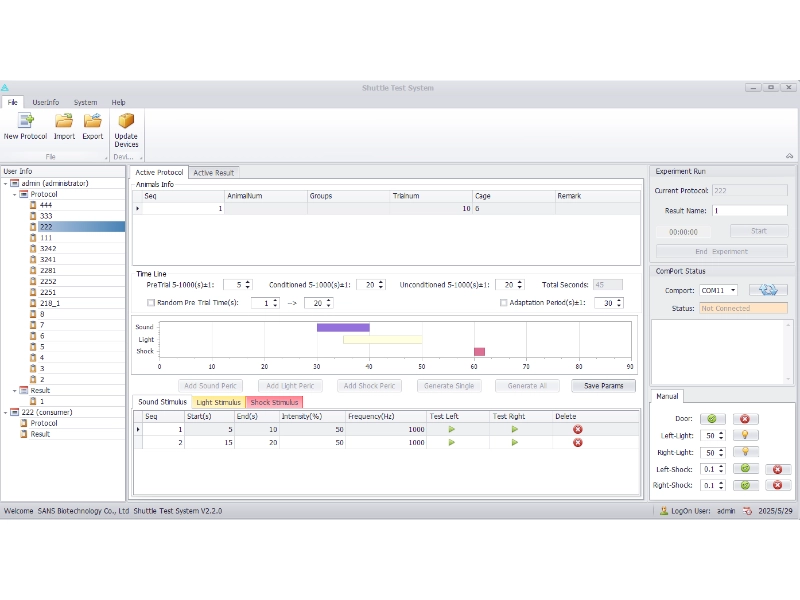
A top-loading door allows easy access inside the box. The chamber contains a sound generator and a visual stimulus (light) that functions separately for each compartment. Software be used through PC connection.
Built to meet GLP standards, the SA223 Automated Shuttle Avoidance Test provides accurate behavioral detection, flexible experimental protocol settings, and high-throughput operation—making it ideal for neuroscience, cognitive research, fear conditioning studies, learning/memory evaluation, and pharmacological screening.
Application
The SA223 Automated Shuttle Avoidance Test supports a wide range of behavioral paradigms:
1. Active Avoidance (Shuttle Test)
• Dual-compartment shuttle learning
• Conditioned avoidance via sound/light CS and foot-shock US
• Measures escape, avoidance, latency, and learning curve
2. Passive Avoidance
• Tests memory retention and inhibitory learning
• Measures latency to enter dark/light compartment after previous shock
3. Learned Helplessness
• Models depression-like behavior and cognitive impairment
• Records escape failures, shock duration, tone/light signals, intervals
• Applicable for Rats and Mice, maximum 32 chambers.
• Conforms to GLP standard requirements, and provides 3Q certification service.
• Stimuli: Sound, Light, Shock Scheduled start: 0~23h.
Software
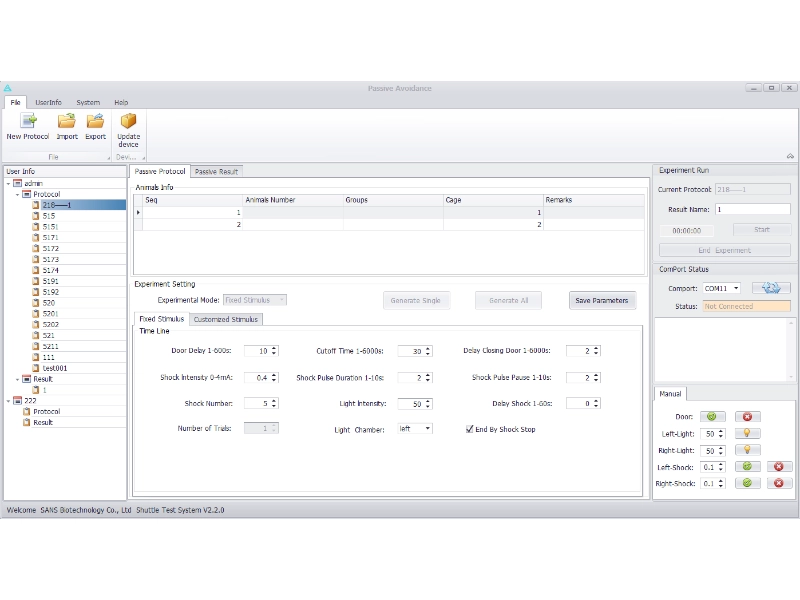
• Independent signal detection and control in each chamber enables precise monitoring of experimental events.
• Independent software control for each channel.
• Shuttle, Passive Avoidance, Learned helplessness is integrated and applicable for the same shuttle chamber.
• Data can be exported to .csv format for further analysis.
Sound
• 2 Independent chambers, each with Range 100-40,000Hz; 1-95dB.
• Sound attenuating cubicle is optional, less than 40dB.
Light
• 2 Independent light controls.
• Range: 0-400LUX, resolution 1%.
• Visible and IR light dual bulb to detect the position.
Electricity Shock
• 0.1-4.0mA in 0.1mA steps AC Current.
• Alternating pulse current ensures consistent shock delivery.
• 2 independent shock grid control ensure high reliability.
Chamber operation
• Automatic door opening and closing to reduce the influence of human interaction during the experiment.
• Chamber opening and closing speed: 2-8cm/s.
• Closing distance: 1-10cm.
• Opening and closing noise: less than 65dB.
• Fully Automated Operation
Software-controlled automated door
Reduces human disturbance for consistent behavioral responses
• High-Throughput Test
Supports up to 32 chambers simultaneously
Ideal for Cognitive research, Learning & memory evaluation, Pharmacological screening etc.
• Flexible Multiple Stimuli
Independent sound, light, and shock stimuli
• Accurate Behavioral Detection
Independent detection per chamber
Ensures precise measurement of movement and transitions for both Rat and Mouse
• GLP-Compliant
Conforms to GLP standard requirements, and provides 3Q certification service.
• Integrated Multi-Paradigm Software
Shuttle, passive avoidance, and learned helplessness are available and included in our device
Each chamber can run different protocols simultaneously
Our Shuttle Avoidance Test has been widely used in various global labs and help researchers achieve more success, covering wide range of studies including behavior genetics, psychopharmacology and behavioral toxicology, and drug screening.
Q1: What is the difference between Active and Passive Avoidance?
Although both involve avoiding a aversive stimulus, the behaviors are opposite: · Active Avoidance: The animal must actively change its location (shuttle to the other side) to avoid the shock. This is an operant conditioning paradigm where the animal controls the outcome with its behavior · Passive Avoidance: The animal must inhibit its natural instinct (e.g., preference for darkness) and passively remain in a safe area (e.g., a bright compartment) to avoid entering a place associated with a shock. This primarily assesses inhibitory memory.
Q2. What is the difference between the SA223 Automated Shuttle Avoidance Test and SA222 Shuttle Avoidance Test?
SA223 Automated Shuttle Avoidance Test provides automated door control, PC-based multi-protocol software, and up to 32 channels, while SA222 Shuttle Avoidance Test is a basic 2-channel stand-alone unit without door automation.
Q3. Does the SA223 Automated Shuttle Avoidance Test support Learned Helplessness?
Yes. SA223 Automated Shuttle Avoidance Test includes full Learned Helplessness paradigms; SA222 Shuttle Avoidance Test does not.
Q4. How many chambers can the Auto Shuttle Avoidance Test control simultaneously?
Up to 32 independent rodent chambers.
Q5. Can different chambers run different protocols at the same time?
Yes. SA223 Automated Shuttle Avoidance Test allows independent protocol settings per channel.
Q6. Does the SA223 shuttle avoidance chamber have automatic door control?
Yes. Doors open and close automatically with adjustable parameters via software.
Q7. What stimulus types can be delivered in shuttle box?
Sound, light, and foot-shock—each independently configurable.
Q8: My rat jump and squeak intensely when shocked in the shuttle avoidance test. Is this normal?
This is normal. Foot shock is an aversive stimulus that causes pain and fear, leading to physiological responses like jumping, defecation, vocalization, and urination . However, if an animal shows persistent freezing or excessive, prolonged stress behavior, you may need to consider lowering the shock intensity.
Q9. Do I need a PC to operate the SA223 Automated Shuttle Avoidance Test?
Yes. PC software is required.