Home » RotaRod vs. Treadmill for Mice and Rats: How to Choose the Right Motor Performance Test
RotaRod vs. Treadmill for Mice and Rats: How to Choose the Right Motor Performance Test
By BioMedSep 20, 2026
Choosing between the rotarod test and a rodent treadmill is a fundamental decision in preclinical motor evaluation. While both quantify physical capabilities, the mouse rotarod specifically measures sensorimotor coordination and balance, whereas a mouse treadmill or rat treadmill evaluates exercise performance, muscle strength, and stamina.
Selecting the correct phenotypic assay ensures accurate data validity for specific neurological and neuromuscular disease models.
RotaRod Test Fundamentals and the Mouse RotaRod
The rotarod performance test evaluates forced motor activity, balance, and sensorimotor integration in laboratory animals. The rodent is placed on a horizontally rotating cylinder elevated above a floor grid, requiring continuous walking to avoid falling.
Primary Metrics
Latency to fall: The duration of time in seconds that an animal maintains balance on the rotating cylinder.
Passive rotation: Instances where an animal clings to the rod without active walking steps.
Motor learning rate: The percentage improvement in performance latency across consecutive training sessions.
Key Applications
Cerebellar ataxia: Detecting balance impairment, gait dysmetria, and fine coordination disruption.
Parkinson’s disease models: Identifying early motor deficits caused by dopaminergic pathway loss.
Drug-induced motor impairment: Screening neurotoxic side effects or sedative drug safety profiles.
Balance disorders: Profiling acute vestibular deficits and brain injury recovery.
Key Advantages
High throughput: Allows simultaneous testing of multiple animals on multi-station systems.
Minimal training required: Requires short pre-training periods compared to complex maze tasks.
High sensitivity: Highly responsive to acute coordination deficits and subtle neurological changes.
When evaluating cerebellar dysfunctions or early neurodegenerative changes, deploying a dedicated mouse rotarod provides repeatable quantitative data without requiring excessive physical exertion.
Treadmill Test Fundamentals for Mouse Treadmill and Rat Treadmill Studies
Forced locomotion tests using a mouse treadmill or rat treadmill evaluate exercise performance, cardiovascular fitness, and skeletal muscle stamina. Observing a mouse on treadmill belts under controlled speeds and inclines reveals systematic muscle exhaustion and mechanical movement adaptations.
Primary Metrics
Distance traveled: Total linear path completed before reaching predefined exhaustion criteria.
Maximum belt speed: Peak velocity maintained prior to physical task failure.
Fatigue time: Duration of sustained physical exertion under fixed or accelerating workloads.
Gait patterns under workload: Stride variations and stance phase alterations recorded during inclined or high-speed running.
Key Applications
Amyotrophic lateral sclerosis (ALS): Tracking progressive motor neuron loss and muscle fatigue.
Muscular dystrophy: Measuring loss of skeletal muscle strength, sarcolemmal fragility, and exercise capacity.
Exercise physiology and metabolic research: Assessing oxygen consumption, energy expenditure, and metabolic adaptations.
Cardiovascular health: Evaluating cardiac function and vascular reserve during standardized exercise protocols.
Key Advantages
Precise workload control: Adjustable speed options ranging from 0.1 to 100 meters per minute with adjustable incline angles from -25 degrees to +25 degrees.
Customizable stimuli: Gentle exercise motivation provided via electric shock, sound, light, or airpuff options.
Continuous fatigue evaluation: Real-time recording of exhaustion parameters across multi-lane chambers.
Core Differences: RotaRod Test vs. Treadmill Testing
Understanding the physiological targets and technical differences between these assays ensures appropriate equipment selection.
Physiological Target
RotaRod Test: Targets motor coordination, balance control, vestibular function, and cerebellar pathways.
Treadmill Test: Focuses on overall exercise capacity, skeletal muscle strength, cardiopulmonary endurance, and fatigue resistance.
Stress and Motivation
RotaRod: Relies on passive task persistence where rodents naturally walk to avoid falling off an elevated cylinder.
Treadmill: Utilizes active motivation methods such as pulse electric shock, audio signals, or non-invasive airpuff stimulation to maintain running pace.
Data Output
RotaRod: Produces a primary continuous variable centered on the time-to-fall latency.
Treadmill: Generates multi-variable metrics, including total distance, belt speed, acceleration curves, shock counts, and exhaustion times.
Model-Specific Selection Criteria in Preclinical Studies
Selecting the appropriate motor assay depends on the pathophysiological characteristics of the rodent model being evaluated.
Parkinson’s Disease and Ataxia
For models of Parkinson's disease and cerebellar ataxia, researchers should prioritize the rotarod test or a specialized mouse rotarod. This phenotypic assay excels at detecting subtle disruptions in nigrostriatal circuitry and cerebellar balance control long before overt muscle wasting or physical debilitation occurs.
ALS and Muscular Dystrophy
When evaluating amyotrophic lateral sclerosis (ALS) or muscular dystrophy, investigators should prioritize a mouse treadmill or rat treadmill. Forced exercise protocols accurately measure progressive physical exhaustion, loss of skeletal muscle strength, and systemic fatigue thresholds under strictly controlled mechanical workloads.
Stroke and Spinal Cord Injury
For complex neurotrauma models such as stroke and spinal cord injury, combining both assays provides a comprehensive phenotypic profile. The RotaRod captures initial recovery of vestibular function and motor re-learning, whereas treadmill exercise measures long-term locomotor recovery, endurance restoration, and overall physical stamina.
Precision Hardware Solutions for Reliable Preclinical Outcomes
Selecting high-precision hardware ensures data reproducibility and minimal animal stress. Whether your research demands sensitive sensorimotor coordination profiling or standardized exercise stamina evaluation, BioMed Easy provides top-tier hardware solutions across both RotaRod and rodent treadmill categories tailored for modern behavioral laboratories.
RotaRod for Mice and Rats
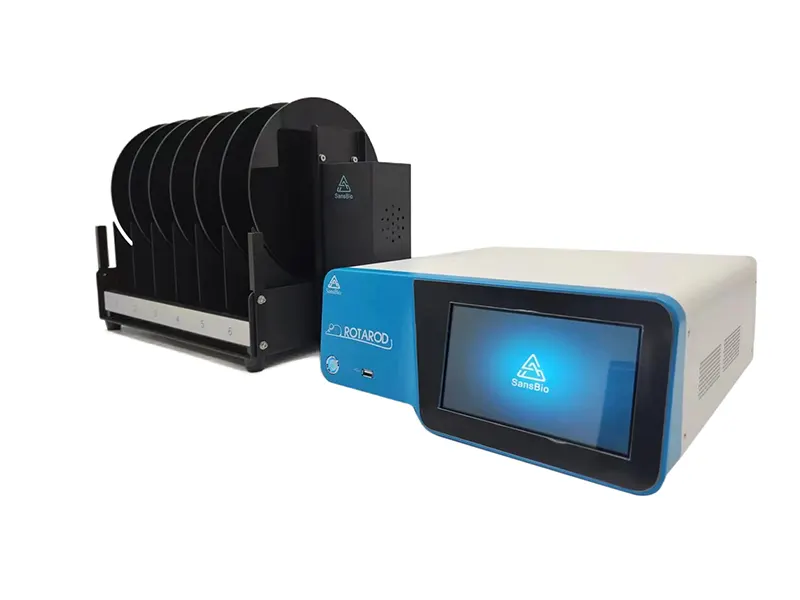
BioMed Easy’s RotaRod for Mice and Rats is designed for evaluating motor coordination, balance, and endurance through forced locomotion on a rotating rod. It supports testing of up to 6 mice or 4 rats simultaneously and features a 7-inch capacitive IPS LCD touchscreen for intuitive operation. Key advantages include:
Wide speed range from 0.05–100 RPM with 0.1 RPM resolution, enabling precise control for different experimental protocols.
Multiple operation modes, including constant speed, uniform acceleration, reverse ramp, and rocking modes, supporting diverse motor behavior studies.
Precision infrared sensor detection for accurate fall detection and reliable data collection.
Built-in data management, including storage of over 2,000 data records, eight configurable protocols, and automatic CSV data export via USB.
Treadmill for Mice and Rats
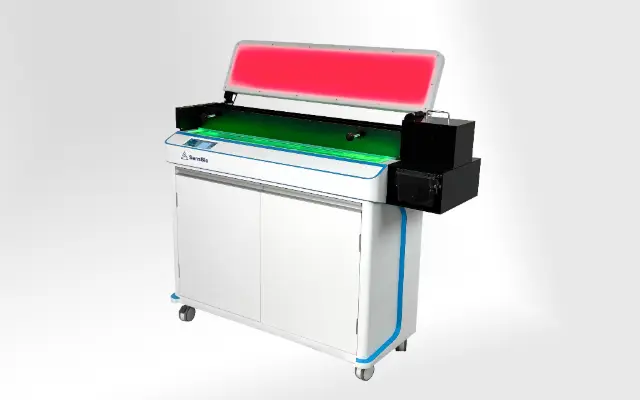
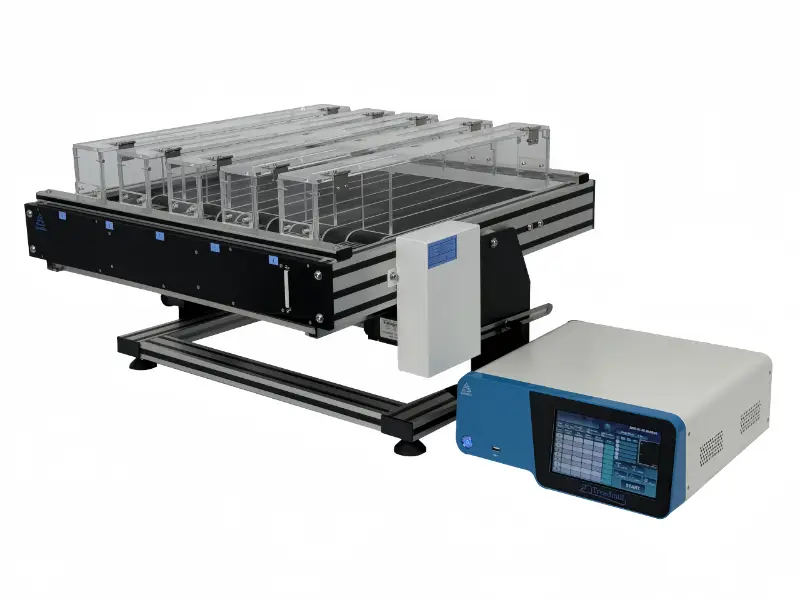
The BioMed Treadmill for Rat & Mouse is designed for exercise capacity evaluation, motor performance testing, and fatigue-related studies. It accommodates 5 rats or 5 mice and provides controlled running conditions with flexible experimental settings. BioMed Key features include:
Adjustable speed from 0.1–100 m/min with 0.01 m/min resolution for precise exercise intensity control.
Multiple running modes, including uniform speed, acceleration, deceleration, and mixed acceleration/deceleration modes.
Adjustable slope from -25° to +25° to simulate different exercise challenges.
Customizable stimulation options, including electric pulse, sound, and light stimulation, with adjustable shock intensity from 0.1–5 mA.
Visit BioMed Easy to request a custom quote, schedule a technical consultation, or explore detailed product specifications tailored to your lab’s workflow.