Lab Animal Equipment
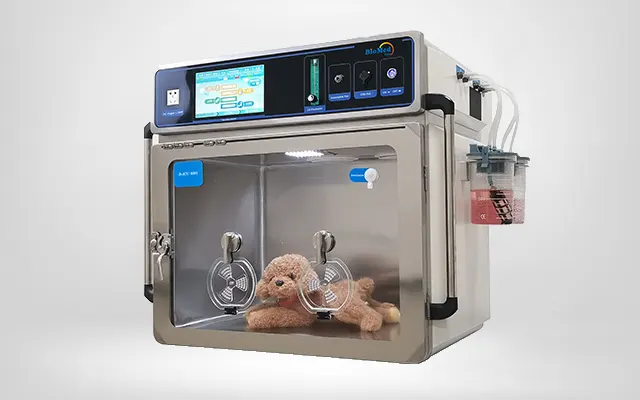
  • Nebulizer rat
  • Aerosol Nebulizer rat
  • Aerosol Nebulizer mouse
  • Aerosol Nebulizer
  • Aerosol Nebulizer
  • Nebulizer rat
  • Aerosol Nebulizer rat
  • Aerosol Nebulizer mouse
  • Aerosol Nebulizer
  • Aerosol Nebulizer

Aerosol Nebulizer

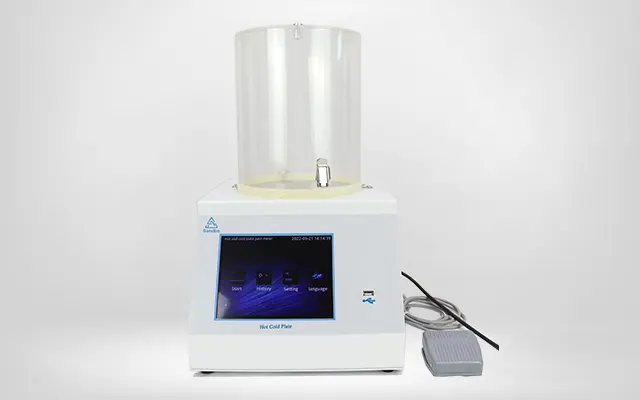
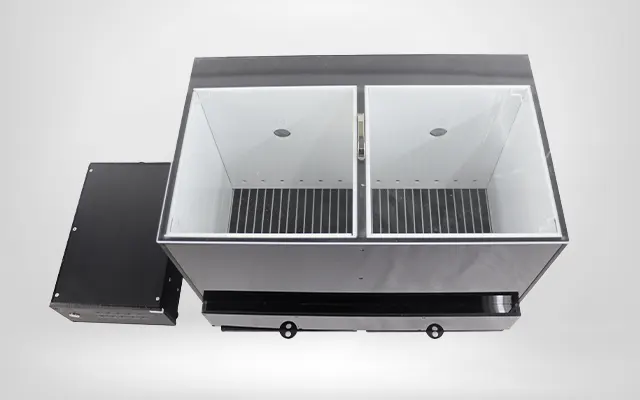
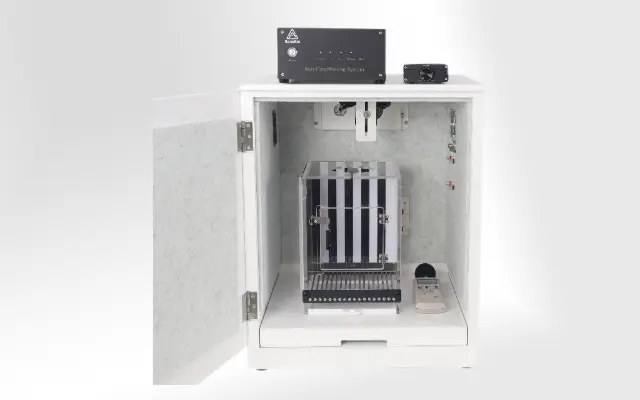
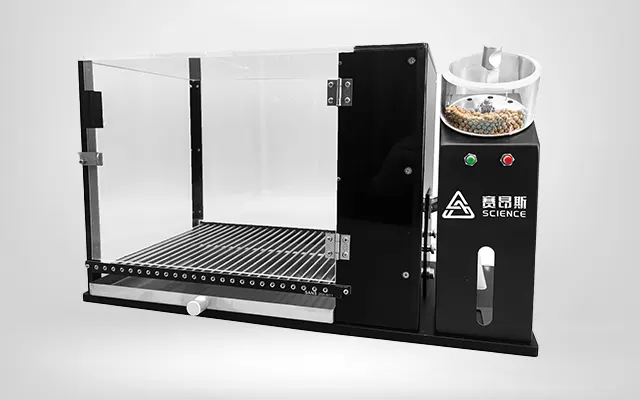
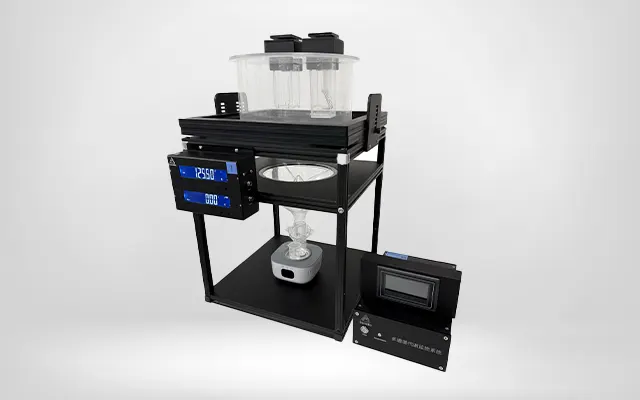
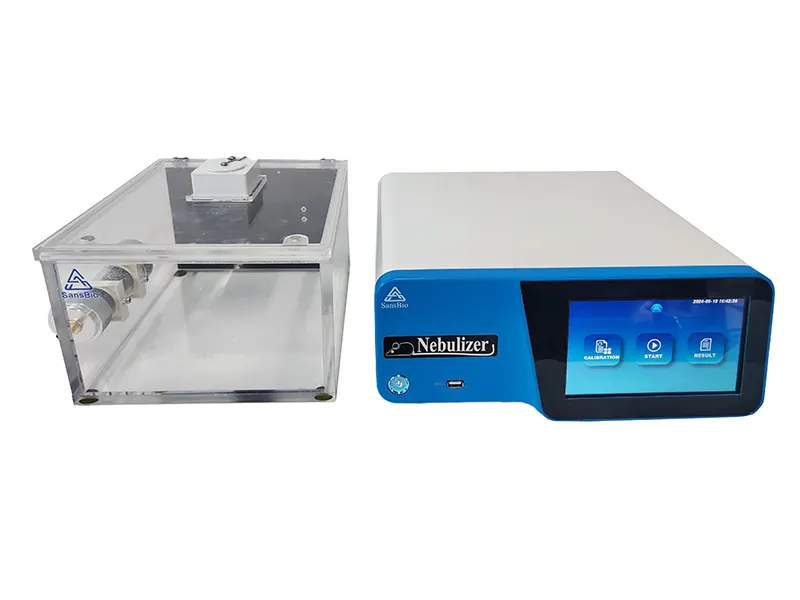
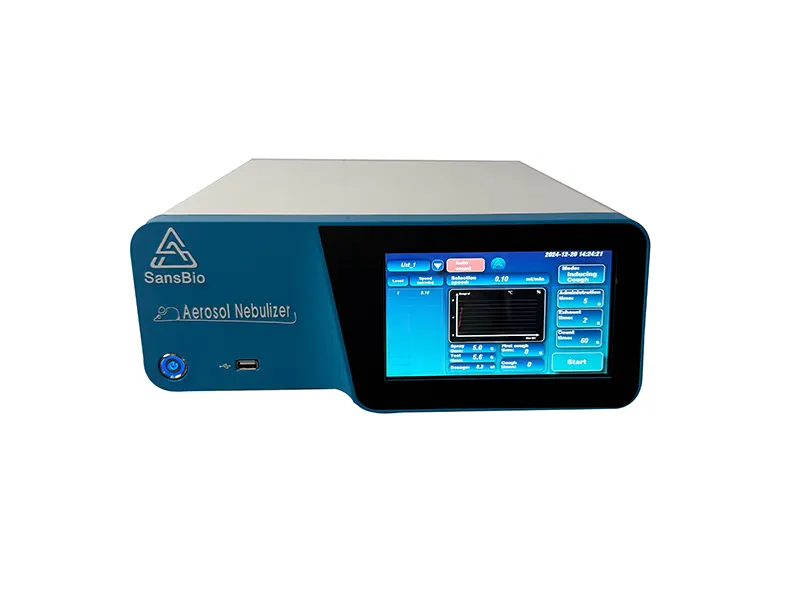
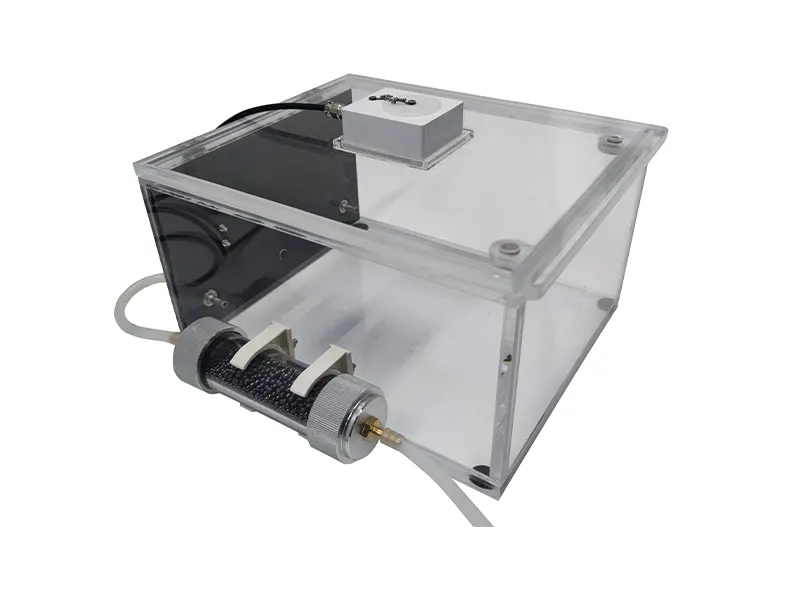
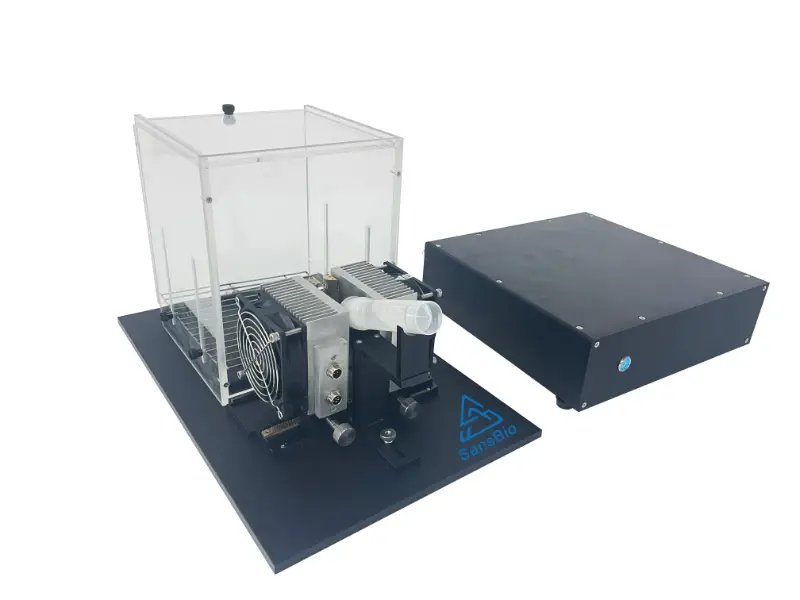
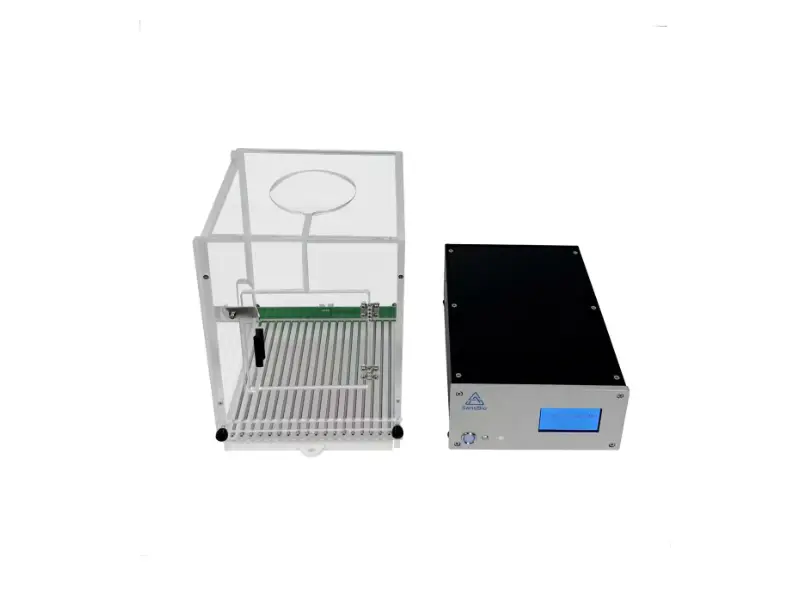
The Animal Chamber Aerosol Nebulizer allows you to easily administer aerosol to one or more conscious animals. It contains the animal chamber which allows animals to move freely while providing consistent aerosol exposure. Our Nebulizer equips with the efficient high-frequency micro-mesh atomizer, combined with speed control technology based on pulse width modulation, it is designed to produce a highly respirable aerosol of virtually any drug in liquid. It well achieves the modeling of small animals in inducing cough, panting, poisoning, anesthesia and accurate drug delivery.

Overview

The Animal Aerosol Nebulizer provides an efficient and controlled method to administer aerosol to one or more conscious animals. The system includes a rodent aerosol exposure chamber that allows animals to move freely while ensuring consistent aerosol delivery. This whole-body inhalation exposure device is ideal for applications such as pulmonary drug delivery, inhalation toxicology, asthma model establishment, anesthesia induction, and poison exposure simulation.
Equipped with a high-frequency micro-mesh atomizer and pulse width modulation speed control technology, our nebulizer produces a highly respirable aerosol suitable for virtually any liquid drug. This enables researchers to achieve accurate, repeatable, and controlled aerosol exposure for respiratory research.

Application

Pulmonary drug delivery in rodents – ideal for testing inhalation formulations.
Inhalation toxicology research – supports chronic and acute exposure studies.
Asthma and COPD animal models – simulate airway inflammation and respiratory challenges.
Inhalation challenge model – controlled exposure for infection or allergy models.
Anesthesia or poisoning studies – safe and repeatable aerosolized administration.

Features

  • High frequency micro-mesh atomizer technology.
  • Produce atomized particles with a diameter 3-5μm (90%), which can enter the alveoli easily.
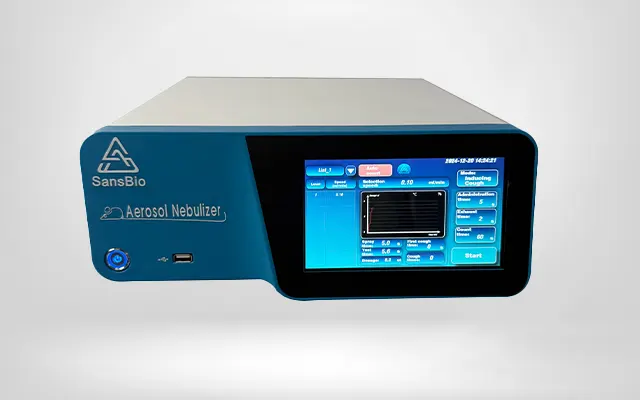
  • 2 modes are available:  Atomization, Inducing Cough
  • 10 levels atomization speed, range 0.07-1.4ml/min.
  • Equipped with automatic exhaust function. The residual atomized drug will be purified and removed after the experiment.
  • Spray time, animal reaction time, dosage, first cough time, cough number can be displayed in real-time.
  • Atomization calibration can be carried out in the device.
Specification

Operation

  • 7inch Capacitive IPS LCD touch screen, resolution 1024*600.
  • Produce atomized particles with a diameter 3-5μm (90%), which can enter the alveoli through the respiratory system of small  animals to achieve nebulization.
  • Two atomizing channels are available, which can be used simultaneously or as backup atomizing channels.

Mode

  • Atomization
  • Inducing Cough

Test Time

  • 1~99999min

Atomization Speed

  • 1-10 levels
  • Range: 0.07-1.4ml/min

Automatic/Manual Operation

  • Includes a foot pedal button to manually manually record the cough time and times.

Exhaust Time

  • Equipped with automatic exhaust function. The residual atomized drug will be purified and removed after the experiment.
  • Exhaust time range: 1-99999s
  • Administration time: 1-99999s

Data

  • Real-time display of spray time, reaction time, dosage, first cough time, cough number.
  • The data can be printed by micro printer. And it is exportable to PC via USB.

Calibration

  • Atomization calibration can be carried out in real time after using different liquids or changing the atomizer unit.
  • The atomization speed can be calibrated before the experiment to ensure the accuracy of the experiment.

Physical Info

Controller Nebulizer Unit  Chamber
Size: 350*300*145mm Size: 65mm*55mm*37mm Small: 5L 255×210×135mm
Weight: 4.2kg O.D. Φ36×25mm Medium: 8L 290×240×160mm
Max. Volume: 16ml Large: 10L 305×260×170mm

Power

AC100V~240V   50/60HZ   20W

Reference

AAV-delivered muscone-induced transgene system for treating chronic diseases in mice via inhalation

Nature Communications

https://www.nature.com/articles/s41467-024-45383-z

STING inhibitor ameliorates LPS-induced ALI by preventing vascular endothelial cells-mediated immune cells chemotaxis and adhesion

Acta Pharmacologica Sinica

FAQ

Q1: What type of Nebulizer is? Is Air jet type or ultrasonic type?
A: Our Nebulizer adopts the high frequency micro-mesh atomizer.
The high frequency micro-mesh atomizer is a device that atomizes liquid substances into particles through high-speed rotation. Its main principle is to use the high-speed rotating parts to generate strong shear force, disperse liquid into tiny particles, and then spray the tiny particles through compressed air to form a mist, which can enter the alveoli through the respiratory system of small animals to achieve nebulization.

Q2: What modes are available in this aerosol nebulizer?
There are 2 modes available in our nebulizer, that is atomizing mode, Inducing cough
In the Atomization, our device records the
Spray time
Reaction time
Dosage;
In the Inducing cough mode, the data can be recorded by manual or automatically, which contains
Spray time
Test Time
First cough time
Dosage
Cough times.

Q3: How the following values are measured (dosage, first cough time, cough number can be displayed in real-time)
Dosage: The dosage is calculated according to the atomization speed and the administration time.
First cough time and cough times:
Automatic and manual record are available for calculating the first cough time and cough times.
Automatic mode: Automatic recording via sound sensor which integrated in our nebulizer chamber.
Manual mode: manual operate the record button by observing the cough state of the animal.

Q4: How to determine the amount of inhalation by animals through the aerosol nebulizer?
A: The amount of inhalation by animals is determined by factors such as the animal’s tidal volume, respiratory rate, administration speed, container volume, and administration time. For expensive drugs, we recommend administering them simultaneously to multiple animals and setting the testing time and rate properly.

Q5: Are there any restrictions on the form of the aerosolized medicine? Can oily drug be used? Are those that may precipitate suitable?
A: Solid medications need to be dissolved in water or other solvents. For particles of 3-5 microns in size can be used in our nebulizer.
Oily medications need to be diluted. After use, they should be cleaned promptly (such as with alcohol) to prevent adhesion and clogging of the atomizer.
Those that may precipitate are suspension solutions. It depends on the size of the particles. They should be smaller than 5 microns in size.

How to Order
Item No. Product
SA703  Small Animal Aerosol Nebulizer

Start Now

Quality First, Cost Effective, Reputation Above All.

form-background

    Message *