Home » 7 Common Open Field Test Mistakes and How to Prevent Unreliable Data
7 Common Open Field Test Mistakes and How to Prevent Unreliable Data
By BioMedNov 06, 2026
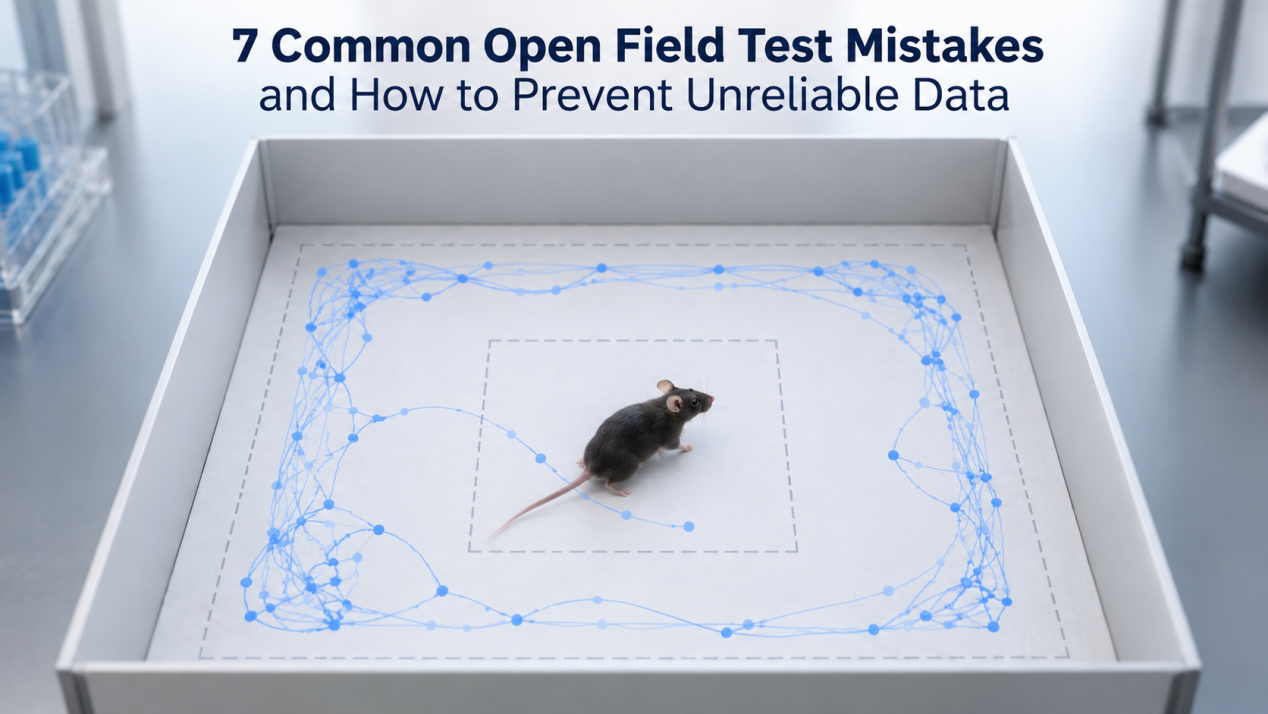
The Open Field Test (OFT) is widely used to assess locomotor activity, exploratory behavior, and anxiety-like behavior in rodents. However, seemingly minor procedural differences can significantly affect experimental results.
Variations in lighting, animal handling, arena configuration, and movement tracking may introduce unwanted variability, making comparisons between experimental groups less reliable.
Understanding these factors is essential for obtaining reproducible behavioral data. This article examines seven common mistakes in open field testing and explains how to prevent them through standardized procedures, accurate tracking, and careful data interpretation.
Inconsistent Testing Conditions
Environmental conditions can influence how rodents explore an unfamiliar arena. Changes in lighting, background noise, room temperature, or testing time may alter locomotor activity and spatial behavior independently of the experimental treatment.
For example, brighter illumination may discourage mice from entering the exposed center zone. Testing animals at different times can also introduce variability because rodents follow circadian activity patterns.
How to prevent this mistake:
Maintain consistent illumination, temperature, and background noise throughout testing.
Schedule sessions within the same defined time window.
Measure and document environmental conditions before experiments.
Distribute experimental groups across testing sessions to minimize order-related bias.
Consistent conditions help ensure that observed behavioral differences are more closely associated with the experimental variables rather than environmental fluctuations.
Poor Habituation and Handling
Rodents are sensitive to unfamiliar surroundings and handling procedures. Transportation from the housing area, exposure to a new room, or inconsistent handling may trigger stress responses that influence exploratory activity.
In a mouse open field test, animals experiencing acute handling stress may show increased freezing, reduced movement, or changes in center-zone exploration.
These responses can complicate comparisons between treatment and control groups.
How to prevent this mistake:
Establish a standardized handling and acclimation procedure before testing.
Allow animals sufficient time to acclimate to the testing room after transportation. Use consistent handling techniques, preferably involving the same trained personnel.
Importantly, room acclimation should not be confused with arena habituation. Repeated exposure to the arena can reduce novelty-related exploration and should only be introduced when required by the experimental design.
Incorrect Arena and Zone Setup
Arena dimensions and zone definitions directly influence open field test measurements.
An arena that is unsuitable for the animal species may restrict natural movement or change exploratory patterns. Likewise, inconsistent center-zone boundaries can produce different center-time and center-entry measurements from otherwise similar trajectories.
For example, a larger center zone may generate different occupancy values than a smaller center zone, even when the animal follows the same movement path.
How to prevent this mistake:
Define the arena configuration before beginning the experiment.
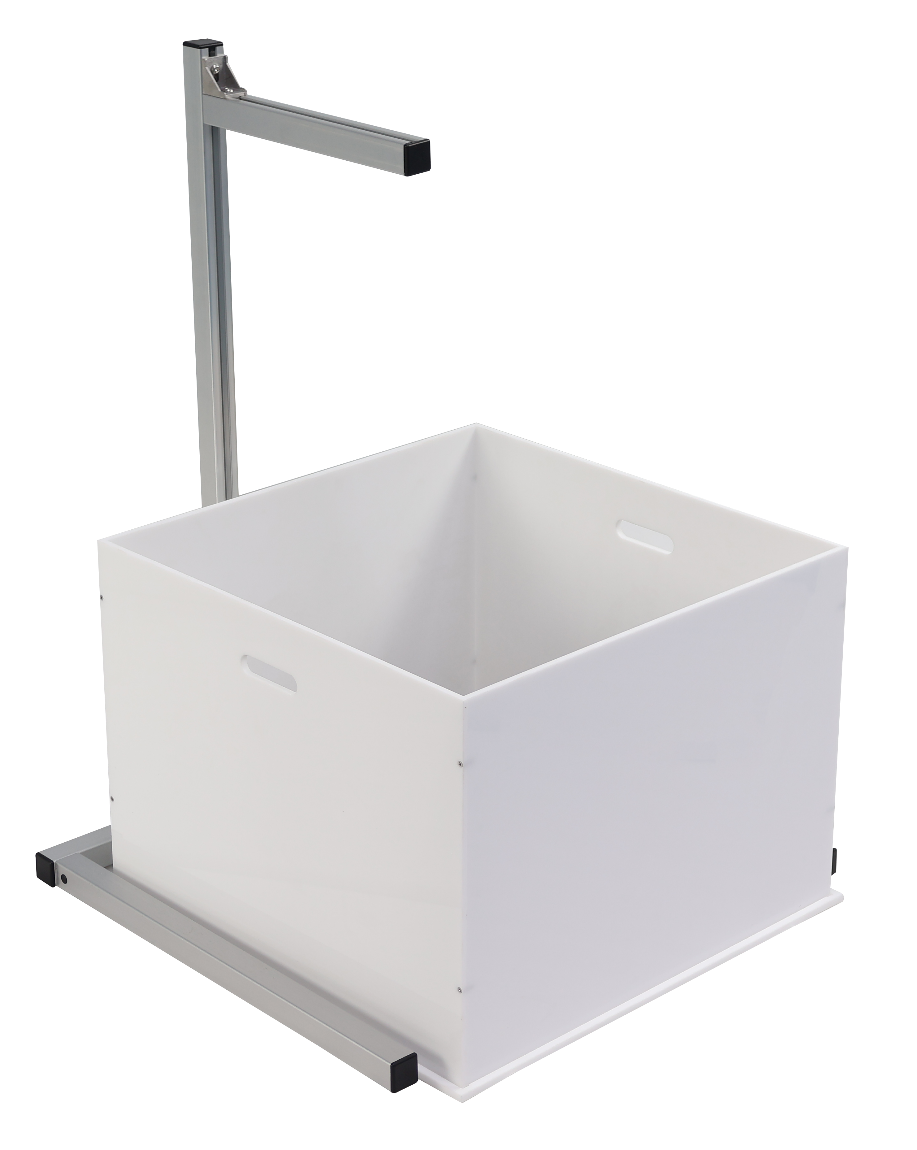
Use appropriate chamber dimensions for mice or rats, and maintain the same dimensions across comparable experimental groups.
Additionally, establish clear center and peripheral zone boundaries within the tracking software. Keep these definitions unchanged throughout data collection.
Documenting arena dimensions and zone definitions is essential when comparing results across experiments or laboratories.
Odor and Cleaning Problems
Rodents rely heavily on olfactory information when exploring their surroundings.
Urine, feces, and other odor residues from previously tested animals may influence subsequent exploratory behavior. Residual cleaning agents can also introduce unfamiliar odors that affect animal responses.
Consequently, inconsistent cleaning between trials may create uncontrolled differences between subjects.
How to prevent this mistake:
Apply the same cleaning procedure after every trial.
Remove visible waste and clean the arena using a cleaning agent approved for the experimental protocol. Ensure that surfaces are sufficiently dry before introducing the next animal.
Avoid changing cleaning products or concentrations during an experiment.
A consistent cleaning routine helps reduce odor-related variability while maintaining comparable testing conditions.
Inaccurate Animal Tracking
Accurate movement tracking is essential for quantifying locomotor and exploratory behavior.
Camera-based tracking systems may experience detection problems caused by shadows, reflections, uneven illumination, or insufficient contrast between the animal and arena floor.
Tracking loss or incorrect position identification can introduce errors into total distance, speed, and zone occupancy measurements.
For example, an incorrectly detected position may create an artificial movement event, while missed detections may underestimate actual movement.
How to prevent this mistake:
Validate the tracking system before beginning experimental data collection.
Check animal detection under the intended testing conditions and confirm that movement trajectories correspond to actual behavior.
After each session, review recorded trajectories for discontinuities, unexpected position changes, or missing data.
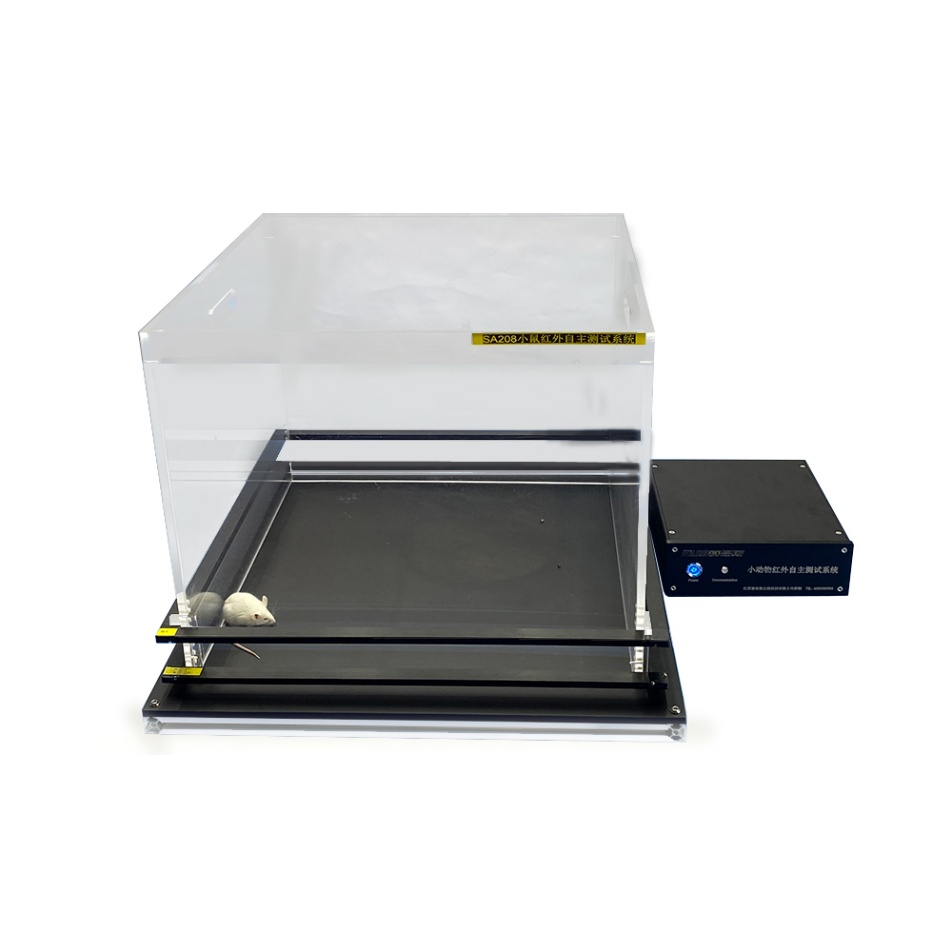
Where conventional video tracking is affected by visual conditions, infrared-based detection may provide an alternative that is less dependent on image contrast.
Confusing Reduced Movement with Increased Anxiety
One common interpretation error is assuming that reduced locomotor activity automatically indicates increased anxiety-like behavior.
Although rodents often avoid exposed areas, reduced center-zone exploration can have several explanations.
For example, a treatment that suppresses motor activity may decrease center entries simply because the animal moves less overall. Similarly, fatigue, sedation, or motor impairment may influence exploratory behavior.
Therefore, center-zone measurements should not be interpreted independently of locomotor performance.
Consider whether reduced center exploration occurs alongside a general decrease in movement.
When necessary, use complementary behavioral assessments to investigate anxiety-like responses.
This approach supports more cautious interpretation and reduces the risk of attributing motor-related changes solely to anxiety.
Incomplete Experimental Reporting
Even when open field testing is performed consistently, incomplete reporting can limit reproducibility.
Descriptions such as "animals were tested in an open field arena" provide insufficient information for other researchers to reproduce the procedure.
Important methodological details are frequently omitted, particularly environmental conditions, zone definitions, and tracking configurations.
How to prevent this mistake:
Include the following information in experimental reports:
Animal species, strain, sex, age, and experimental group
Arena dimensions, floor material, and center-zone definition
Lighting conditions, room temperature, and testing time
Handling, acclimation, and cleaning procedures
Test duration and animal placement procedure
Tracking technology, software settings, and calculated parameters
Randomization, blinding, and data exclusion criteria
Clear reporting allows researchers to identify methodological differences and assess whether results can be compared across studies.
Conclusion: Improving Data Reliability with Standardized Tracking
Reliable open field test results require consistent procedures, accurate movement tracking, and careful behavioral interpretation. Standardizing these factors helps reduce experimental variability and supports reproducible data.
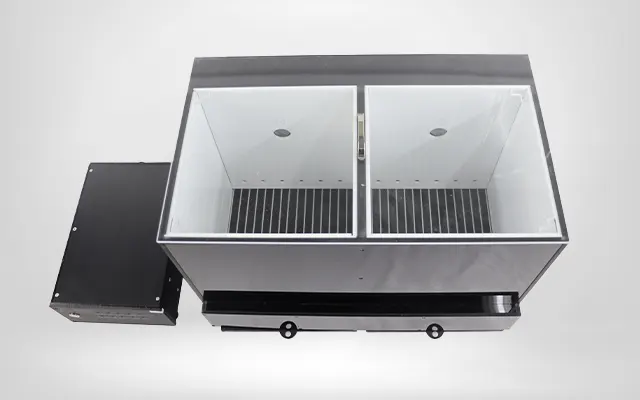
Except the classic Open Field Test with Video Tracking Software solution, BioMed also launch the IR Open Field Test supports automated behavioral tracking for mice and rats, with key features including:
Infrared detection: Adopts dynamic scanning infrared detection technology, which not affected by ambient lighting and animal fur color.
High tracking accuracy: Provides a stated detection accuracy of less than 5 mm.
Real-time data collection: Records movement trajectories and behavioral activity during testing.
Automated measurements: Measures distance, speed, rearing, and zone activity.
Explore the BioMed Easy IR Open Field Test to learn more about its specifications or contact our team to discuss your experimental requirements.