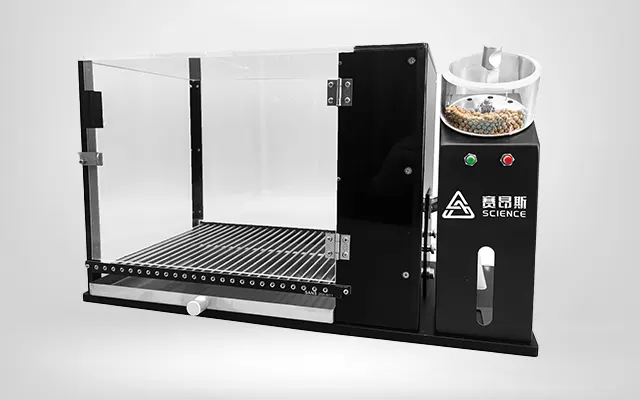
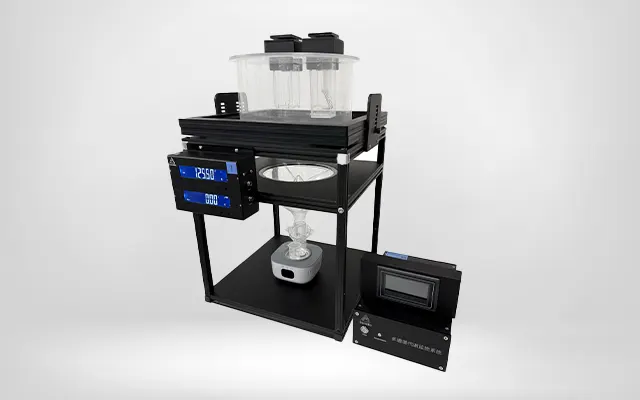
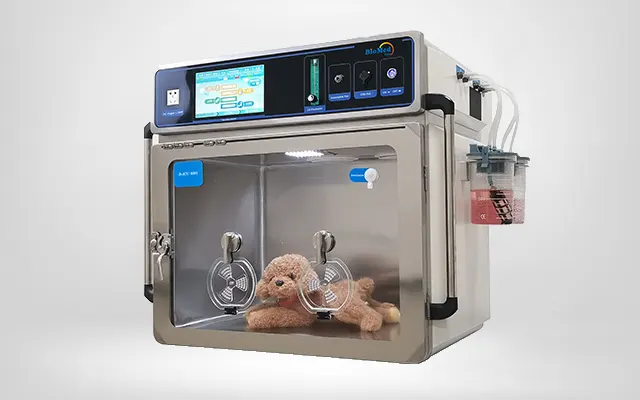
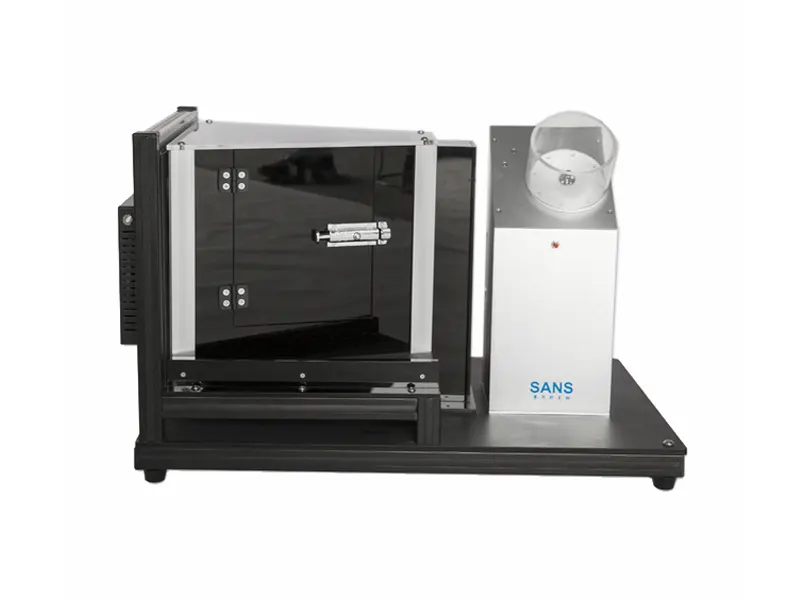
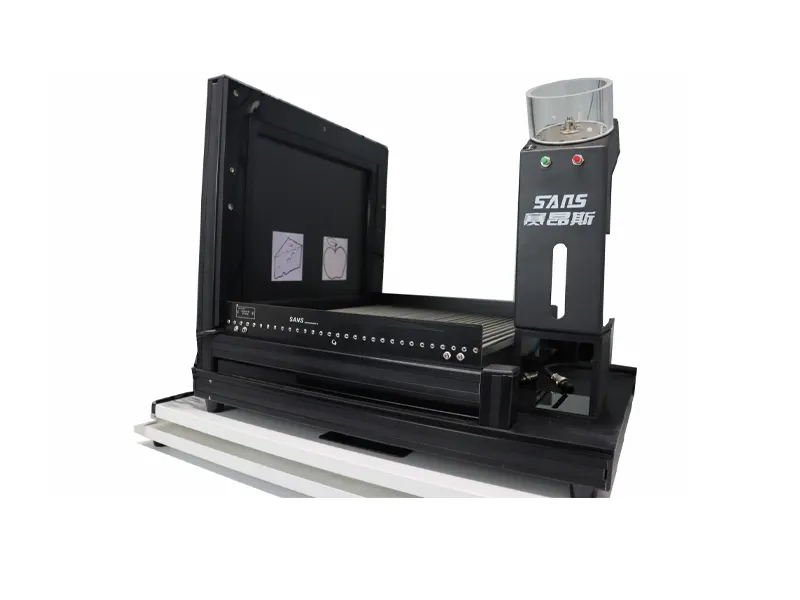
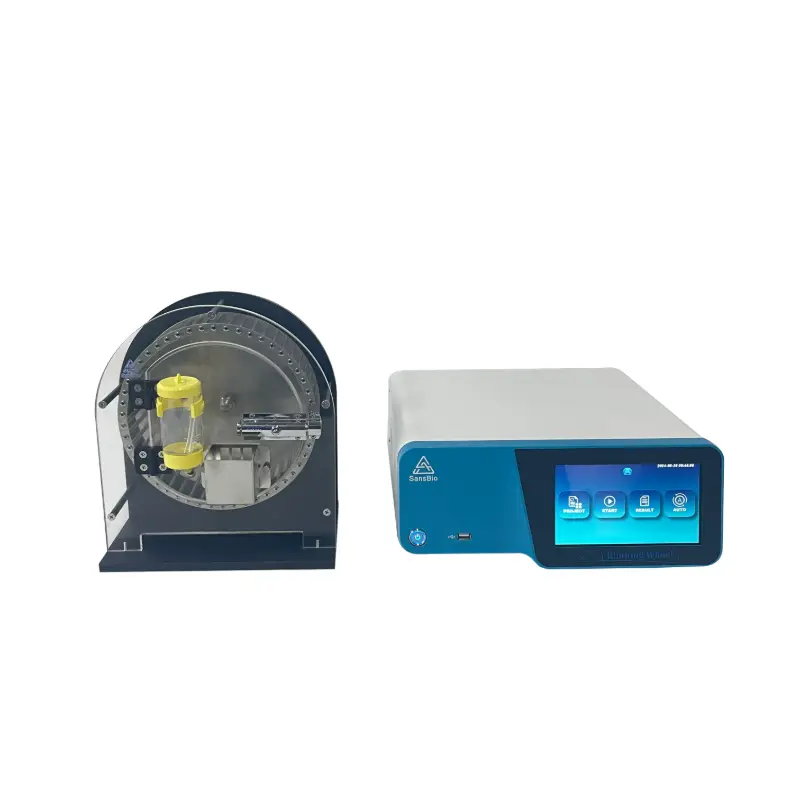
The Skinner Operant Chamber, also known as the Operant Conditioning Chamber or Skinner Box, is a classic and widely used apparatus in behavioral neuroscience and psychology research.
Based on Thorndike’s Law of Effect and B.F. Skinner’s theory of operant conditioning, this system enables researchers to study how rewards and punishments influence behavior.
The Operant Chamber for rats and mice allows precise control and recording of conditioned responses, providing an ideal setup for studying learning, memory, addiction, decision-making, and neuropharmacological effects. Its modular and automated design supports diverse experimental paradigms — from lever pressing and nose poking to touchscreen tasks — ensuring both flexibility and reproducibility in behavioral research.
The Skinner Operant Chamber, also known as the Conditioned Behavioral Operant Chamber was created and designed by B.F. Skinner in the 1930s to study operant conditioning behavior. It is not only used to study animal behavior, but also widely used in the brain and behaviorScientific research, such as complex behavior training, Alzheimer’s disease, Parkinson’s disease, autism, stimulation or damage to certain parts of the brain, the effect of some certain drugs on animal behavior, combined photogenetic, electrophysiology to study various affective neural circuits, and so on.
The Skinner Operant Chamber is used to train animals (rats or mice) to perform specific actions such as pressing a lever or touching a screen in response to certain stimuli.
Correct responses trigger positive reinforcement (e.g., food pellets or liquid rewards), while incorrect responses can be followed by mild punishment or no reward, forming the basis of operant learning.
Application
Neural Circuit Studies: Learning, memory, motivation, addiction, and decision-making Neuropharmacology: Drug screening for neurological and psychiatric disorders (e.g., Alzheimer’s disease, Parkinson’s disease, depression, schizophrenia, addiction) Behavioral Conditioning: Reward-seeking and avoidance learning Cognitive Function Testing: Attention, discrimination, and delay-based paradigms
Features
Supports up to 32 channels of simultaneous testing.
Each chamber can be configured separately to improve the training efficiency.
Supports up to 32 channels of simultaneous testing.
The screen display picture can be customized, both in size and display position.
Sound
Sound stimulation frequency intensity can be adjusted, range: 60-120dB, resolution 1dB
Sound stimulation frequency range: 100-20000Hz, step 100Hz, any form of sound source can be added.
Light
Cue light intensity is adjustable, range: 0-100%, step 1%
Electric
The shock electric intensity can be adjustable, with DC pulse current. Accuracy 0.01mA, range 0.05~4mA.
Mouse shock grid: spacing 10mm, diameter 4mm
Rat shock grid: spacing 15mm, diameter 5mm
Food Reward
The food tough equips with the diet detection to accurately record the eating time of experimental animals. With 65535 color full-color clue light, with program control.
Equips with close-loop technology in automatic pellet dispenser, ensure one pellet drops at a time.
Adopt the self-developed pellet dispenser, automatic or manual are available.
Pellet dispenser size: Mice Φ4mm; Rats Φ5.6mm, 20mg for mouse and 45mg for Rat.
Liquid Reward
The high-precision microinjection pump combined with intravenous drug delivery kit can realize the reward of in-vivo intravenous drug delivery.
Diameter of the injector: 1-60mm, support a variety of syringe specifications (1, 2.5, 5,10,20,30,60), speed of the pump: 0.5~60r/min, single injection 0.0001~1ml, real-time calculation of injection speed, injection time, fixed increment is optional. Increment: 0.0001~1ml, with syringe pump self-locking button.
Programmable control of single liquid reward.
Maximum amount of reward can be set to prevent excessive reward and damage to animals.
Liquid feeding module is equipped with sensors, which can detect the animal’s drinking and water asking behavior, and accurately record the time.
Operant Chamber
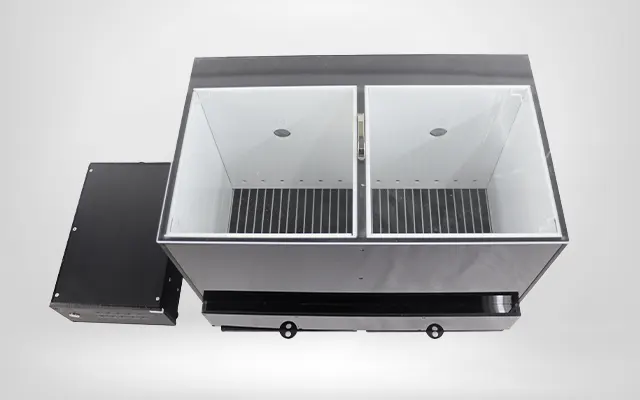
Adopts classic trapezoid design, with black non-transparent material, to ensure that animals are not interfered by outside.
Rat Trapezoidal chamber height: > 340mm
Mouse trapezoidal chamber height: > 180mm
Screen size: 15-inch resolution: 1920*1080
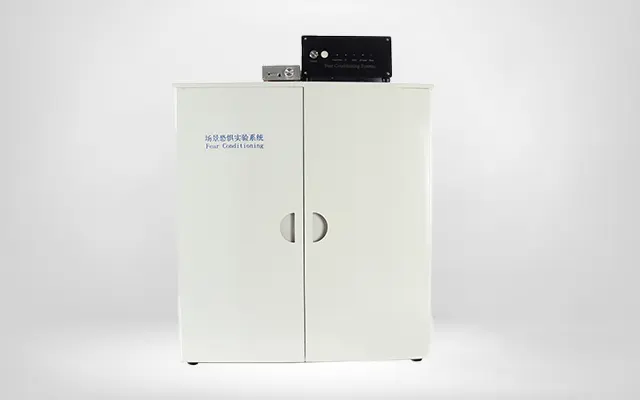
Sound Insulation Cubicle
Sound insulation cubicle: inner layer with sound absorbing material, noise less than 40dB. Removable slide design for convenient cleaning.